By Sunayana Prabhu
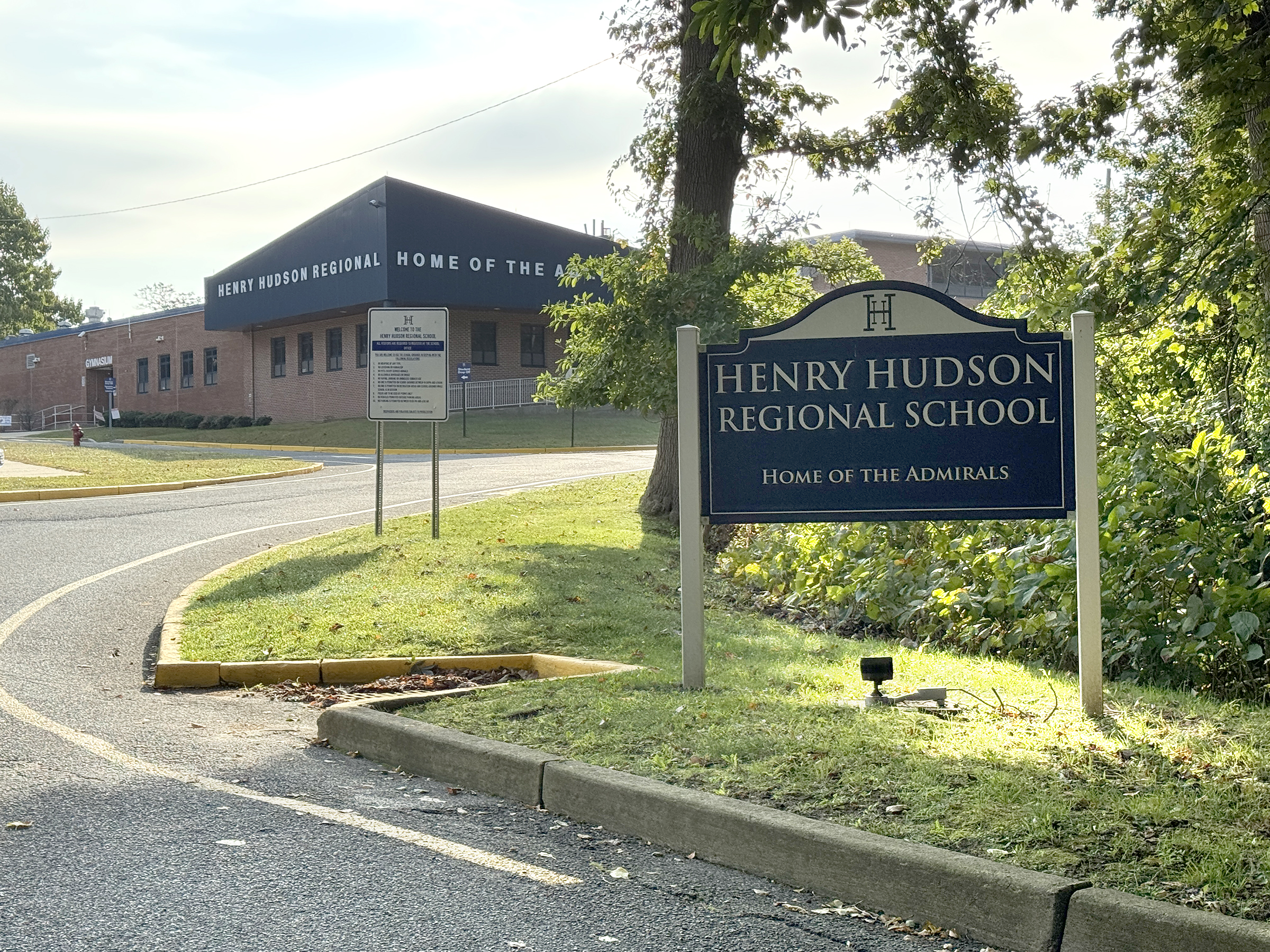
HIGHLANDS – A proposal to build a cellphone tower on the grounds of Henry Hudson Regional School (HHRS) drew strong pushback from parents and residents at a recent board of education meeting. Parents – mostly concerned about health risks to their children – also raised a potential conflict of interest: The proposal is being made by FSD Enterprises LLC, which is owned and operated by state Sen. Declan O’Scanlon (R-13). O’Scanlon works professionally as an infrastructure consultant for the cell tower industry and was contracted by the borough in May for wireless telecommunications consulting services. He presented the plan at the Henry Hudson Regional School District board meeting Sept. 17.
This was the first public information session on the issue and no action was taken.
The Plan
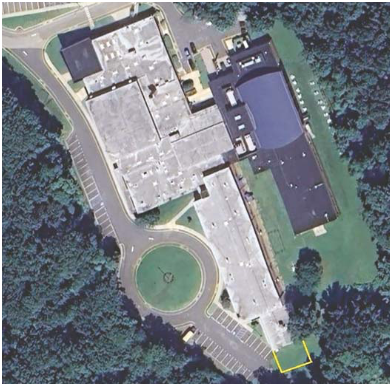
The proposal calls for placing a cellphone tower, also known as a wireless communications monopole, on the school property located at 1 Grand Tour in Highlands.
O’Scanlon told the school board and residents that the project could both address a long-standing coverage gap in the area and generate steady revenue for the school district. The proposed cell tower would provide coverage in an area where “people have been clamoring for it for years. And it would bring revenue from the structure to the school district. It’s got a lot of benefits,” O’Scanlon said.
He estimated the tower could generate between $50,000 and $180,000 annually, depending on the number of carriers leasing space on the monopole, with contracts typically lasting 20 to 25 years. The tower would likely attract Verizon and eventually other carriers, he said.
According to O’Scanlon, wireless carriers such as Verizon and AT&T, among others, are mandated to build cell towers to fill coverage gaps and to provide seamless coverage throughout the state. O’Scanlon noted that these mandates are imposed by the Federal Communications Commission (FCC), which regulates interstate and international communications by radio, television, wire, satellite and cable in all 50 states, the District of Columbia and U.S. territories.
O’Scanlon argued that placing a tower on school property was preferable to allowing one on nearby private land. “If the tower is going to come anyway, and you have an opportunity on public property that is at least as obtrusive or less obtrusive, you ought to take it.”
“It’s the right thing to do,” he said, because the benefit when leased through a public entity such as a school district is that the proceeds go to the public rather than a private landowner. The cell tower “would bring revenue from the structure to the school district,” O’Scanlon said.
He addressed concerns about health risks from potential exposure to levels of radiofrequency (RF) radiation – a type of non-ionizing radiation also emitted by devices such as cellphones or Wi-Fi routers but the risks from cell towers is “much lower” compared with cellphones, he said.
“Cellphone towers show no sign of posing a health risk,” O’Scanlon said, citing FCC standards. “RF exposure decreases exponentially with distance. So, even though cell towers operate with a higher power than cellphones, your cellphone is right next to you. Nobody’s getting closer than 100 feet to the base of the cell tower.”
State and Borough Regulations
According to the site map presented by O’Scanlon, the cell tower is proposed on a patch of land adjoining a corner parking lot next to a door in the school.
According to Highland’s zoning ordinance, wireless telecommunications towers in the borough can be built up to 100 feet tall on lots of at least one acre. Towers between 100 and 200 feet tall require a minimum lot size of three acres, and towers exceeding 200 feet need at least nine acres. The ordinance also requires towers to be set back from property lines by at least one and a half times their height.
In addition to approval from borough officials, the proposal would require strict compliance with state and federal agency rules. According to FCC guidelines, new towers must comply with the agency’s environmental review, which ensures protection of natural and historic resources under laws set by the National Environmental Policy Act (NEPA), the National Historic Preservation Act (NHPA), and other environmental statutes, such as the Endangered Species Act (ESA). Depending on the tower’s height and location, construction may also require approval from the Federal Aviation Administration (FAA) to ensure aviation safety.
O’Scanlon said the project would only cost the district in legal review fees and minor administrative expenses. Carriers would handle construction, permitting and maintenance, with site visits limited to about once a month. Any leases would generally run for five years, with multiple five-year extensions potentially lasting more than 20 years.
School board members asked O’Scanlon whether the district could request incentives, such as field upgrades, in addition to lease payments. He said that, while carriers generally prefer straightforward cash payments, the district would be free to dedicate the revenue from the cell tower lease to capital improvements or bond payments.
Parents Resist
The Henry Hudson Regional School District serves students from pre-K through 12th grade in both Highlands and Atlantic Highlands, two boroughs within O’Scanlon’s legislative district.
Several parents and residents expressed concerns about the ethics of O’Scanlon bringing the proposal to install a cell tower on school grounds, as he is directly involved in promoting the plan to his constituency.
“It seems inappropriate for our own state senator to profit from contracts with government institutions such as schools within the district he’s elected to serve and protect. While our senator stands to profit, our children and teachers will be left to feel consequences,” parent Chelsea Witkowski told the board.
“There is no ethical violation,” O’Scanlon said.
According to a May 7 resolution, the borough council contracted with FSD Enterprises, LLC for wireless telecommunications consulting services. The services include an initial investigation, wherein FSD will perform an assessment of the municipal property that the borough may be interested in making available for the placement of a tower, as well as an initial investigation into how the property may align with the needs of multiple wireless carriers. According to the resolution, FSD Enterprises, LLC received an initial retainer fee of $2,500 and will receive 35% of the first-year lease payment from each wireless telecommunications tenant secured by FSD.
“It’s all transparent,” O’Scanlon said.
He noted district officials would also be authorizing a Request For Proposals (RFP) if the proposal moves forward, “which is an open process” that will allow officials to solicit competitive bids from wireless telecommunications lessees for the project.
Board members said there will be multiple public meetings for residents to voice concerns.
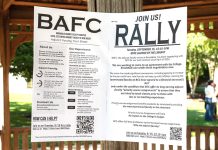
Witkowski, who has launched a Facebook group to push back against the proposal, also cited research articles about potential health risks from RF radiation, including cancer, reproductive and neurological effects, as a cause for concern. “The amount of radiation exposure received depends on the amount of time exposed and distance from the source,” she said, adding that children are particularly vulnerable due to their developing bodies. Witkowski drew references from several reports, citing one from California where four students and three teachers were diagnosed with cancer over a three-year period. Parents at the school blamed a campus cell tower. Following protests and the storming of a school board meeting by 200 parents, the wireless carrier Sprint agreed to remove the cell tower. Investigations into radiation and water quality continue in that community. Witkowski also noted that FCC guidelines only consider short-term effects, not long-term impacts. She cited studies suggesting significant cancer risk occurs within 350 feet of a tower and recommending 500 meters as a safe distance.
“I think that it’s irresponsible to say that RF radiation is completely safe,” she said.
“I assure you that there’s no one on the board that would risk child safety for money,” Rich Colangelo, board president, said in response.
Megan McGuane, another resident, conceded that the internet is “divided” about the health impact of cell towers but noted that, “while the research isn’t definitive in any one direction,” it is “fairly new and underfunded.”
“If a wireless telecommunications model doesn’t get built, someone might miss a call from a telemarketer; but if it does get built, a kid could die of cancer,” McGuane said. She also warned the board that the cell tower will have an impact on her school choice for her children. “If other parents also choose to not send their children here and enrollment does take a hit, then the valuable funding and the sparkling new resources will become worthless.”
Resident Joanie Milchesky, however, advocated for the cellphone tower. “I’m in the park all the time and you lose transmission in there and that could be a dangerous thing. So, I’m all for it,” she said.
The board will continue to review the plan, conduct further investigation, and hold public meetings before taking a final vote.
The article originally appeared in the September 25 – October 1, 2025 print edition of The Two River Times.