By Stephen Appezzato
Some parents are giving tech the cold shoulder, exercising more caution with children’s smartphone access.
Ince Apple released the first iPhone in 2007, smartphones have become increasingly ingrained in everyday life, with people of younger and younger ages acquiring the powerful gadgets. Now, it seems a new page is turning, as concerned parents urge others to delay a child’s first smartphone and educators advocate for phone-free learning environments.
“There are so many alternatives that we can give kids without giving them the apps and the internet in their pocket,” said Rumson parent local chapter of Wait Until 8th, a national movement urging parents to wait get a smartphone.
“The purpose of it is to just delay the smartphone,” she said, offering a basic or “dumb
phone” as an alternative that allows parents a way to communicate with their child while preventing kids from accessing social media and the internet by themselves.
Participating parents urge others to sign a pledge. Once a local pledge receives 10 signatures, it becomes active and is recognized by the national organization. The pledge can then be sent to more and more parents in the region with the signers’ names displayed.
“It’s kind of a strength in numbers situation,” DiPietro said. “You say, ‘Oh, you know, now I know my daughter’s best friend in school, her parents signed the pledge, so I can say to my daughter, your best friend is also in the same situation.’ They’re not getting a phone until eighth grade and it gives you a little more strength to your argument.”
After DiPietro and a friend signed the Wait Until 8th pledge, they decided to email other parents in Rumson and pass the message along.
So far, the movement has been well-received in the Two River area, with groups of parents from Conover Road Primary and Elementary, Deane Porter, Forestdale, Knollwood, Markham Place, Point Road, Rumson Country Day and Sickles Elementary schools taking the pledge. According to the national website, there are more than 65,000 pledges across the United States.
“We’re trying to collaborate and create a community. It doesn’t matter what school our kids are in, all these kids know each other and most of us are in the same town. The more people we can get onboard, our thought is, the better off our kids will be,” DiPietro said.
According to the Wait Until 8th website, the average age at which a child gets a smartphone is about 10, with social pressures weighing on children around fourth grade. Most kids begin using social media by age 12, with 40% of children ages 8 to 12 on social media apps like Instagram, Snapchat and TikTok, even though in the United States 13 is the minimum age to access social media under most companies’ terms.
Wait Until 8th is a grassroots parent-led initiative, meaning schools don’t usually take an active role in the campaign.
“The schools cannot really get behind and endorse it,” DiPietro said. But, “they’ve been appreciative that we are taking the initiative and doing this.”
While educators and school boards can’t control when students are given their first smartphone, they do have a say in how those phones are used in the classroom and on school grounds and some schools are onboard with limiting or prohibiting smartphone use.
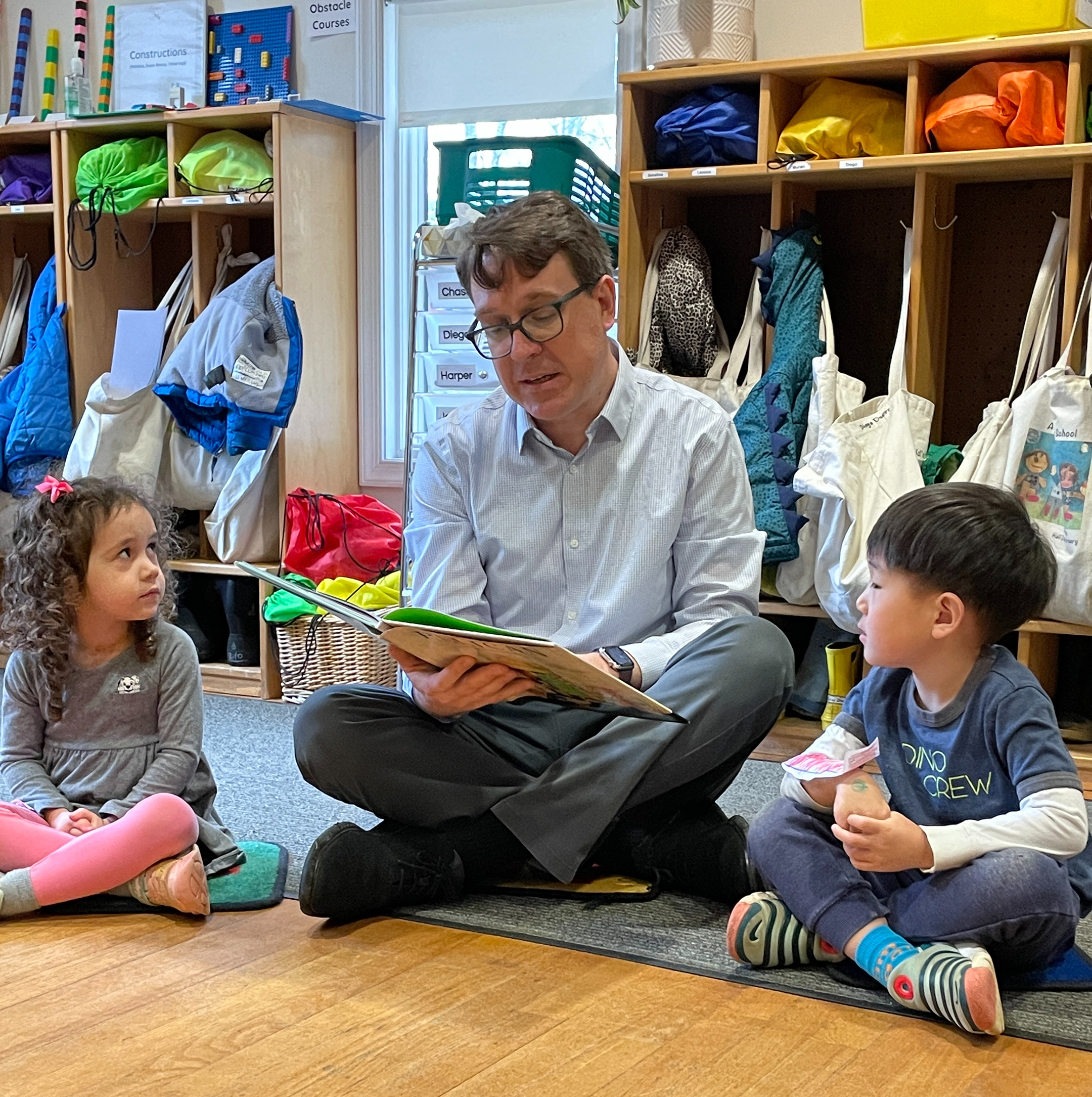
A Child’s Place in Lincroft is a screen-free school for children ages 2½ through 7. School director Zach Klausz is passionate about maintaining an offline environment, especially for students at developmental ages.
“It (the smartphone) has fundamentally changed childhood,” said Klausz. “We can see the numbers, bear them out, like the suicide rate, the depression rate, all these really serious (and) terrifying stats are jumping in society, and especially by the time they’re in middle school and high school,” he said.
“We’ve kind of allowed these giant for-profit corporations to get our children’s attention way earlier than we ever allow children to be that involved with these kinds of for-profit corporations and these guys have one goal – keep them on the platform, keep them addicted, sell more advertising,” he said.
During COVID-19 pandemic lockdowns, A Child’s Place was one of a few schools that hosted classes outdoors, rather than online. However, this was not the case for the majority of students around the county, who had access to laptops, parents’ smartphones and iPads while at home.
“The pandemic happened, and then we kind of came out of the fog, and right away we’ve noticed just sort of a small but fundamental shift in your average preschooler who starts school with us, in terms of their resiliency, their problem-solving abilities, their expressive language,” Klausz said. Similarly, Klausz noted social media can affect people’s natural risk-taking behavior. Observing life through a screen and living vicariously through others’ social media accounts is “something that a lot of children are going to default to because it’s more predictable.”
Klausz and other educators attribute these shifts to extended uses of smart devices, during which children are not socializing or using all of their senses.
“At a very young age, we’re sedentary, but we’re looking at a lot of stimulation in the brain, so the human is working very little to get a lot of excitement,” he explained. Educators around the country are also seeing an uptick in children needing support for basic social skills like sharing and interactions.
On the bright side, DiPietro and Klausz are optimistic there is a growing interest in delaying children’s access to internet browsing and social media and turning away from tech, with more and more studies being done on the topic. Similarly, best-selling author and psychologist Jonathan Haidt’s latest book, “The Anxious Generation: How the Great Rewiring of Childhood is Causing an Epidemic of Mental Illness,” released in March, is prompting parents around the world to be more cautious with tech use.
“To see this movement kind of take hold, to see society finally starting to get a grasp on what is actually going on here is really exciting,” Klausz said. “And it does start in my world, at the preschool world, where we are building habits.”
The article originally appeared in the August 15 – 21, 2024 print edition of The Two River Times.