By Sunayana Prabhu
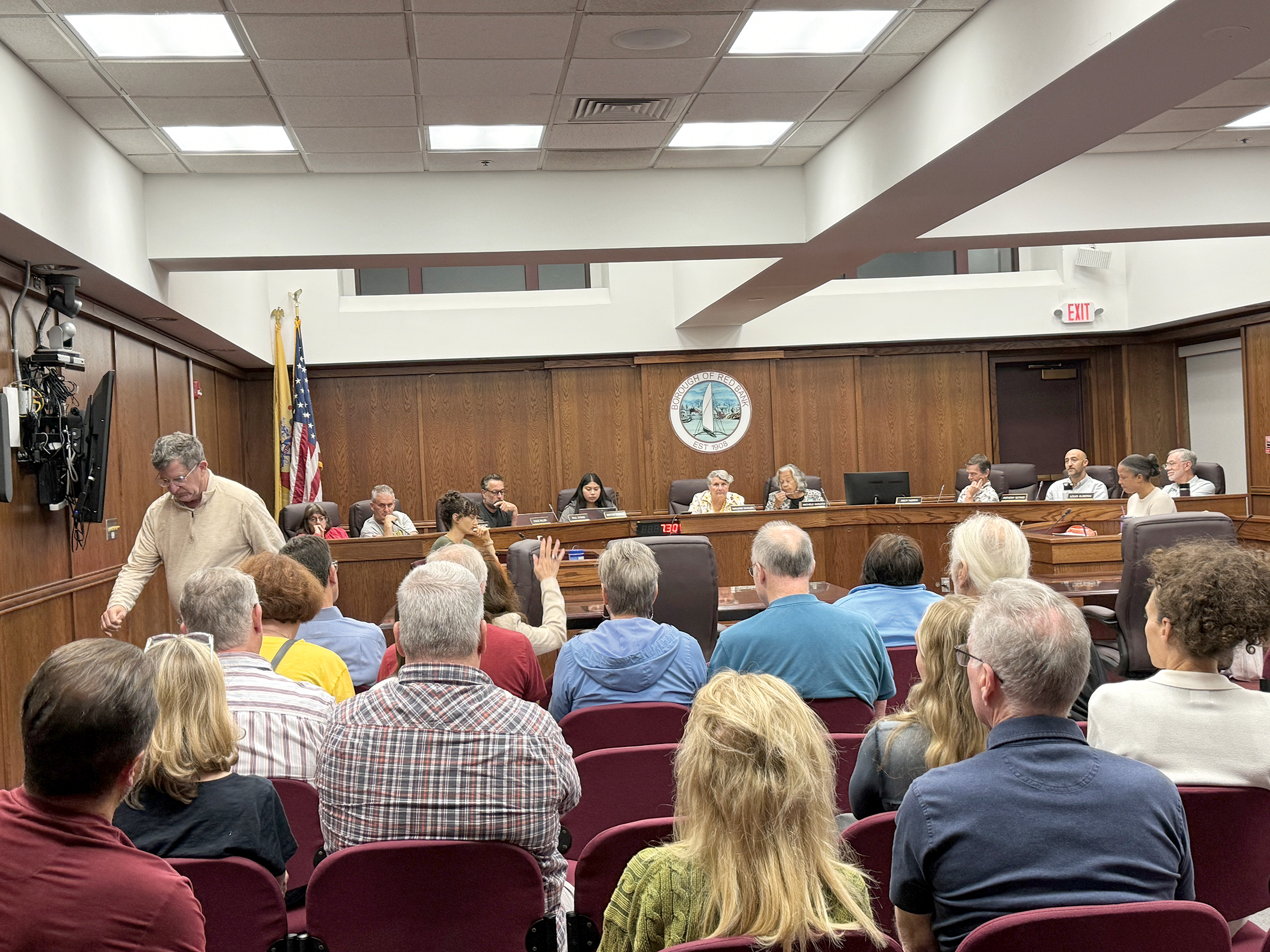
RED BANK – The borough’s Historic Preservation Commission (HPC) has tabled Irving Place’s nomination for a historic district designation after the majority of homeowners on that block fiercely disputed the idea.
“Nineteen of the 22 (homeowners) opposed this designation,” said Robert Clark, a 45-year resident of Irving Place, during the HPC meeting, reiterating details from the residents’ petition sent to the commission.
Clark was backed by a room full of Irving Place residents who turned up at the Wednesday meeting to voice concerns about the potential negative impact on property values and the added bureaucratic hurdles they would face in making renovations or repairs under the HPC’s purview.
The commission recently notified Irving Place homeowners that their properties were being considered for historic designation, which would require the commission to review any exterior renovations to their homes.
According to the commission, the goal of the historic designation is to preserve, protect and develop an appropriate and harmonious setting for the borough’s significant historic resources. However, following the pushback, the HPC – reinstated and empowered earlier this year after languishing – withheld its first step in the designation process and instead decided to perform a comprehensive review of all properties in the borough.
“Irving Place is off the table as a separate designation,” said Michele Donato, attorney for the HPC, at the end of the meeting. “There’s going to be a comprehensive review process for the historic resources in the borough. They (Irving Place properties) are not going to be singled out.”
Donato explained that in the 2024 Master Plan, the planning board recommended a comprehensive review of all historic resources. Historic properties identified by Monmouth County and the National State Register were “not in the ordinance” and “not regulated.” Therefore, Donato said, the commission is going to engage in a process of “comprehensive planning” to identify historic properties throughout the borough, including on Irving Place.
The HPC will also adopt design guidelines as a resource for homeowners who want to repair or renovate their homes.
The commission had identified 22 properties on Irving Place as “contributing” or “non-contributing” for a potential historic designation, which sent a wave of resistance down the quiet tree-lined street that sits unobtrusively between Broad Street and Maple Avenue.
“So much of what you like is not historic,” resident Laura Garrett told the commission, describing several neighboring houses that were “gut renovated” and lacked original features. “It’s a great street, but it’s not particularly original,” she said.
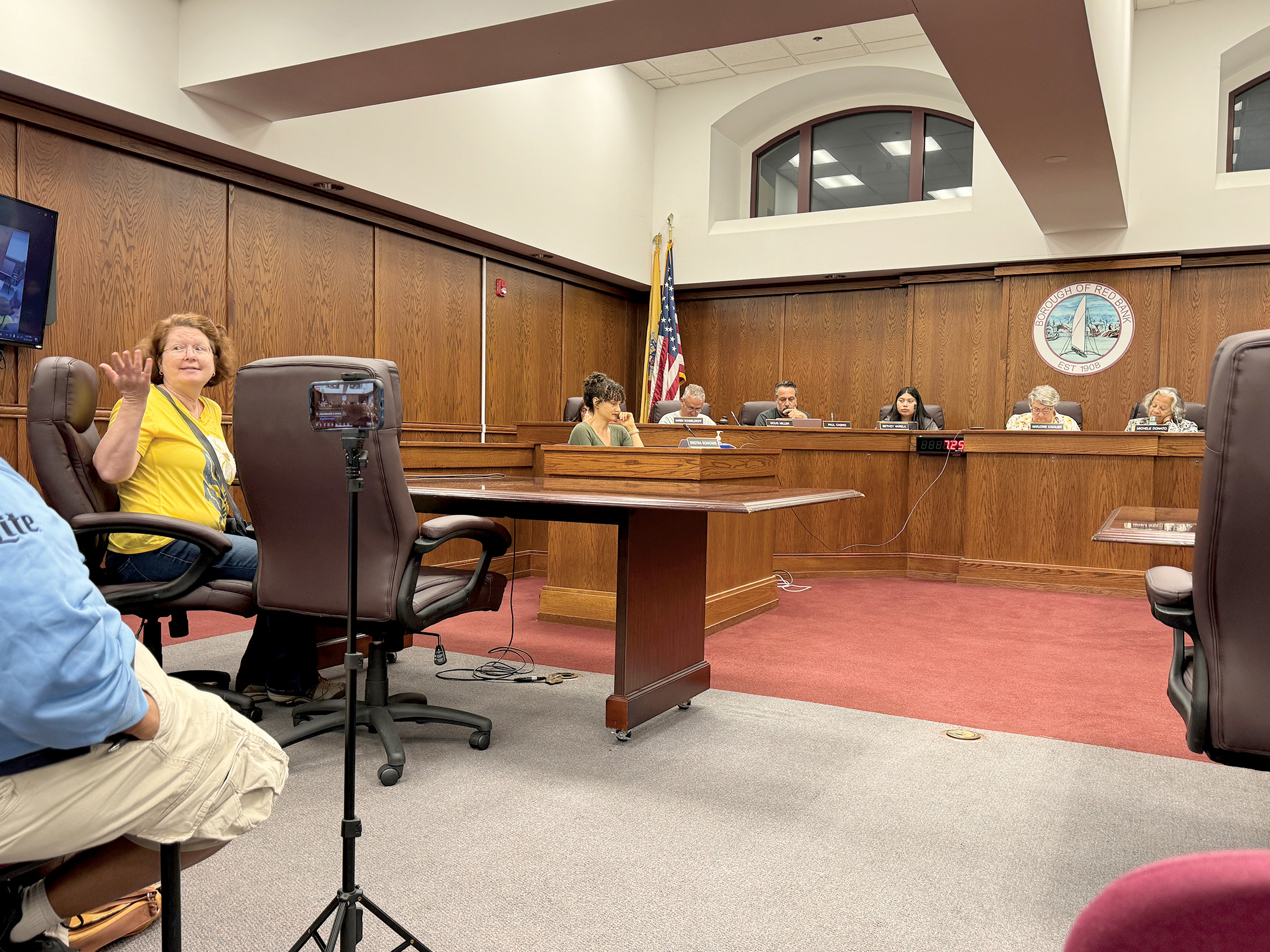
Her “great concern” was that houses needing renovation the most “just won’t get renovated.” “Someone won’t be able to afford what you (HPC) want, and so the house won’t get fixed,” Garrett said. For instance, she explained, if a house had vinyl siding, the HPC may prefer cedar shakes, which she said cost approximately $4,000 per square foot. “It just won’t happen.”
Also, she said, pointing to the HPC members, “You hate the navy blue that I picked (for my house). And I picked it, I painted it, I love it. So do I have to get your permission to keep it?”
HPC member Marjorie Cavalier clarified that a decision about historic designation comes after considering several criteria, including the study of a property’s history, not necessarily appearance. “We’ve been talking a lot about the appearance of the house, but sometimes the designation is based on the person who lived there or the person who designed it,” she said.
The borough currently has two designated historic streets, Washington Street and Broad Street. Property owners on those two streets have also been notified of their historic status and new guidelines.
According to the HPC, properties within a historic district, whether residential and commercial, old or new, must follow HPC guidelines for any exterior changes. This means notified property owners need to apply for HPC approval before making any exterior changes like renovations, additions, demolition, fences, signage and more to their properties. After reviewing an application the commission may recommend it to the borough’s planning board for final approval or denial.
The rules only apply to exterior facades. Interior changes to a building and routine maintenance do not require an HPC review process.
However, without “tangible benefits,” Irving Place resident Michael Barrett said during the meeting, “I’m not going to be inclined to be in favor of a change that imposes tangible obligations.”
“I just dread the thought of going through an extra layer of approvals,” resident Lynn Ross said, recalling her recent experience repairing old steel windows. “I dug and dug and dug down for grant money, for anything to do with funds for historic houses once I found out about it. Nothing. Why? Because only houses or buildings that are open to the public can receive any kind of money,” she said, noting the lack of tax benefits or grant funding for historic homes in the borough.
Donato said during the meeting that there have been efforts in New Jersey to provide historic credits for restoring and upgrading older homes, “but the state has never responded to the request to do so.” Louis Almerini, and HPC member, asked Donato if a tax credit is something the borough could consider.
“Yes, the borough would be able to do so,” Donato replied, citing an example from New Brunswick, where a tax abatement plan provided five years of tax relief on added improvements to restored homes. “It can be done locally,” she said.
Borough resident Sue Viscomi agreed that the HPC could be a “good resource” on how preservation goals can be met by working closely with the property owners, but she questioned the commission’s control. “I see it’s kind of absurd because you’re not paying their taxes,” she said. “What happens when you spread to other parts of the town (where) they can’t even afford lunch, but you’re going to demand them to have a certain type of shingles and windows?”
Resident Walter Hopkin, a licensed professional engineer and planner and certified municipal engineer, called the commission’s proposal “onerous” and “an undue hardship” and asked how the Irving Place designation came about.
Cavalier explained that when members were appointed to the HPC they “were trying to bring things up to date.” She said she personally “went and looked at every house” on the borough’s list of “over 200 homes.” One of the things the HPC was tasked with was determining if there were additional places in Red Bank that qualified for designation. The HPC came up with the idea of proposing Irving Place since the street “was one of the first to be electrified, one of the first to receive public mail, with a great variety of homes that I think could have had some historical significance,” said Cavalier.
The HPC plans to hold a public meeting at the Red Bank Library in October to further engage residents on the historic preservation process.
The article originally appeared in the September 26 – October 2, 2024 print edition of The Two River Times.