By Cindy Zipf, Executive Director, Clean Ocean Action
Reflecting on the marine waterways of the Two River area over the last 10 years, in honor of The Two River Times’ 35th anniversary, was a most revealing and rewarding trip down memory lane.
The decade was marked by the marine ecosystem being threatened by pollution, industrialization and unusual ecological oddities.
These were met with a distinctive community response – vigorous engagement and action.
From the outset, there was the surprising condemnation of a large swath (565 acres) of the Navesink River for shell fishing due to harmful pathogen pollution – dubbed “poo-llution.”
The reaction was swift. An alliance of towns, groups and citizens rose to the challenge, uniting behind the Rally for the Navesink, an initiative led by Clean Ocean Action (COA). This award-winning and successful collaboration continues to work to find and fix pollution sources. The most popular crusaders were Environmental Canine Services and their sniffer-dogs, Sable and Remi. They joyfully used their super-power noses to track down potential pollution hotspots in the area. Then came the community volunteer heroes who stepped up at the crack of dawn to take samples at the locations, which were analyzed by state officials or at the COA in-house lab. This led to many fixes, and we came very close to restoring the Navesink by 2020. That year, amid growing concerns about the Shrewsbury River, the rally program expanded to become Rally for the Two Rivers.
Both watersheds are brimming and bustling with amazing, dedicated people working hard to meet the challenges of these waterways. These include green teams, environmental commissions, elected officials, public works employees, businesses, students, organizations and more. Many sources of poo-llution were found and eliminated or reduced.
While the pandemic slowed some aspects of the monitoring progress, good work continued, as it does today. Volunteer water monitors are back in action and, while all is not rosy, with new poo-llution sources popping up again, they are met with swift and dedicated responses from town officials and community leaders to “find it and fix it.”
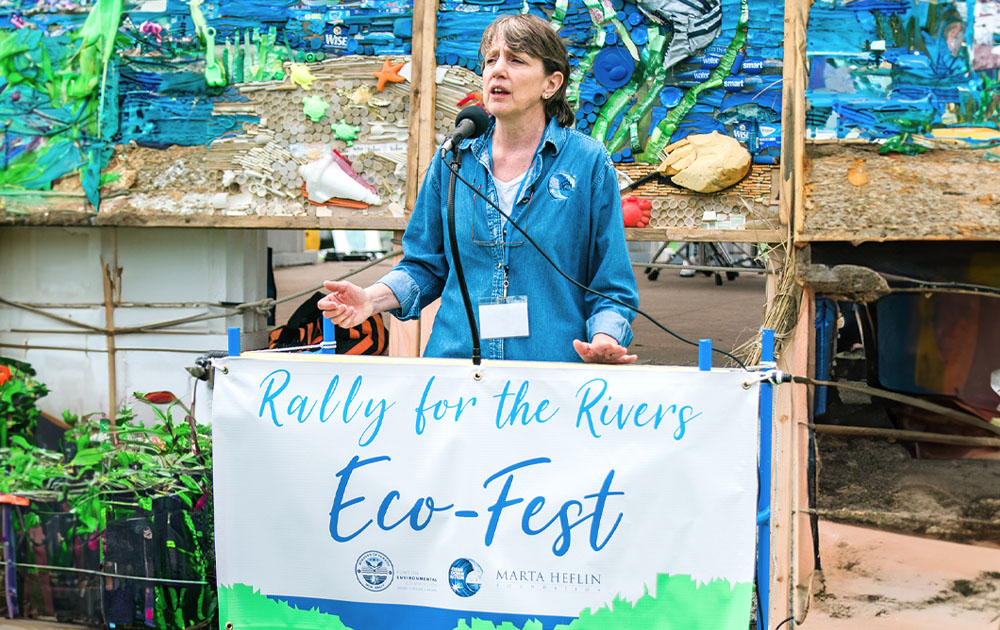
Importantly, communities are also focusing on the many other sources of water quality concern in the rivers, such as fertilizers, flooding, sea-level rise, litter and more. These are tied to the excellent Sustainable Jersey program. The Annual Two Rivers Eco-Fest, established in 2019 on the Navesink River in Rumson’s Victory Park, brings together the wonderful communities to highlight the many ways they are working to improve water quality and focuses on youth to instill waterway mindfulness and stewardship for life.
As for the many maritime oddities over these years, remember the “clinging jellies?” They made their shocking debut in 2016 in the Shrewsbury River. Their tiny size (a dime) belied their wallop of a sting, sending some to the hospital. Fortunately, as quickly as they came (no one knows from where), they seemed to fade – though take care because they have not completely vanished.
Some will also recall the many “fish kills” (of menhaden or bunker) that occurred throughout the decade. Some were worse than others; some were caused by algae (mahogany tide) or low oxygen. The worst was caused by a Vibrio bacterial infection that led to “spinning disease;” the affected fish would spin on the surface and were marked by lesions. The fish pandemic killed hundreds of thousands of fish and triggered significant – and very pungent – challenges for many towns, including costly removal of the dead fish.
Many people may also remember the alarming spike in whale deaths (over 70) from 2022 to 2024 between Cape May and Montauk, New York, with several washing up in the Two River area. There remain many unanswered questions about these deaths and calls for investigations continue. Encouragingly, however, the number of deaths has declined recently.
Major industrial threats lurked offshore, including oil and gas drilling and a proposed methane pipeline through Raritan Bay known as the Northeast Supply Enhancement (NESE), which dominated the conversation over the years. These faced strong bipartisan opposition and both were stopped, for a time. While offshore drilling has been sidelined for now, NESE is not only back; it has now been approved by New Jersey and New York. Of most concern in the Two River area is that nearly a million tons of contaminated muck will be resuspended in Raritan Bay, polluting waterways and habitats. This will significantly threaten shellfish and marine life. The Two River communities strongly opposed the project, and efforts will continue to stop this unwanted and unnecessary project.
Another issue of interest and controversy was the fast and vast expansion of offshore wind projects beginning in 2018. There are thousands of turbines proposed for over 1 million acres off the Jersey Shore, including off Long Branch. Many questions remain regarding ecological impacts, weather pattern changes, radar interference, hurricane resilience, cost, lifespan and more. Recently, many offshore wind projects have been put on hold pending new assessments, although the Empire Wind project, a partnership between Equinor and BP about 17 miles off the coast of Long Branch, has been allowed to proceed and is doing so rapidly.
As of now, 54 monopiles have been installed. The next step is the installation of the pole, blades and hub, resulting in a combined height of over 951 feet for each turbine (nearly as tall as the Chrysler building). Protect Our Coast NJ is leading a lawsuit against the U.S. government and Equinor for alleged project violations. Clean Ocean Action joined as a lead plaintiff.
In sum, the tales within and around the Two River area’s watershed are fascinating, dramatic and storied and The Two Rivers Times has been steadily and fairly covering the news and culture, highlighting the remarkable good work being done by an enormously dedicated network of neighbors and organizations. Challenges remain, no doubt, just as there is no doubt they will be met with the passion of the Two River community and beyond. They are united together not just for today, but for future generations. As always, therein lies the hope and promise – the power of the people.
As a final “tail” of affirmation, eagles and osprey were once rare along the two rivers; now they are frequent flyers, so much so that they were removed from the New Jersey Endangered Species list this year – a true milestone. Now that’s a happy ending.
The article originally appeared in the December 18 – 24, 2025 print edition of The Two River Times.