By Jody Sackett
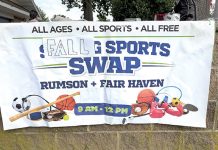
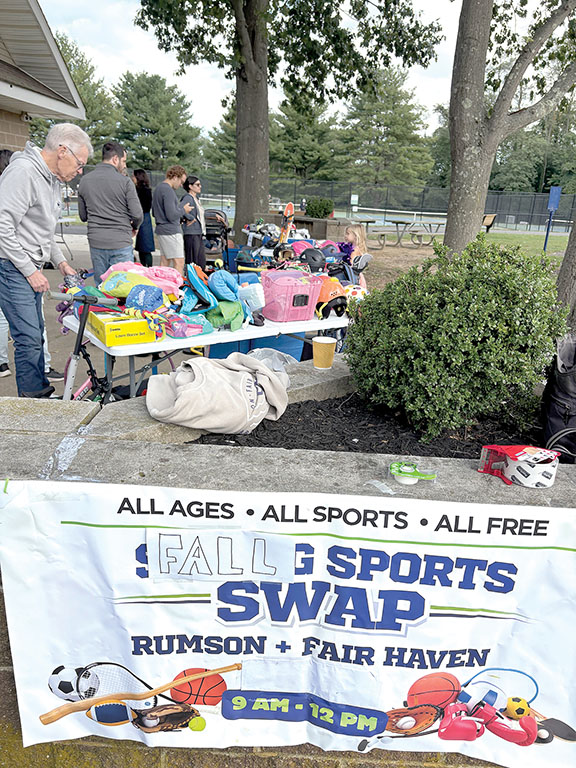
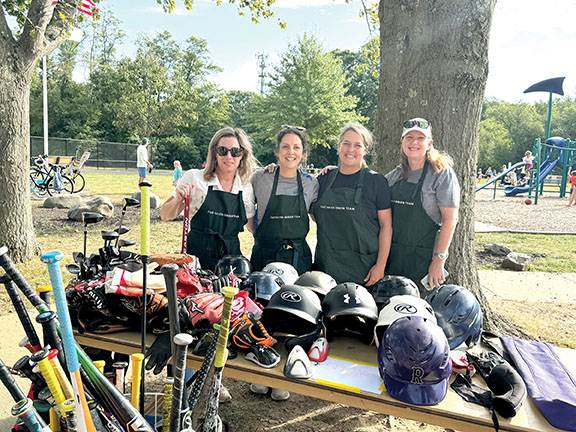
FAIR HAVEN – The place was hopping at last month’s Sports Swap at Fair Haven Fields. Gently used lacrosse and field hockey sticks piled on tables competed for space with tennis and pickleball rackets, basketballs and baseballs, and even skateboards and bicycles. Dozens of cleats clamored for room with soccer balls and footballs. Pint-sized soccer players from adjacent pitches at Fair Haven Fields stopped by after their games to shop.
And they didn’t need their parents’ credit cards, because everything was free.
The Fair Haven Green Team (FHGT) organized the first Sports Swap in 2023 as an eco-friendly initiative to engage the community. Capitalizing on the thrifting trend and the popularity of local sports, the swap offered an ideal opportunity to highlight the benefits of reuse.
Reasons for the Swap
Equipment can be pricey and children outgrow it quickly; cleats alone barely last a year before they’re too small.
As Sigourney Toll, one of the swap founders, explained, “The goal is to keep good sports gear in play and promote reuse. Through sports, we can engage both the kids and their parents and promote sustainability.” It keeps usable gear out of already-crowded landfills and, she added, saves families money by letting kids try new sports without an added expense.
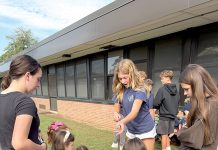
FHGT began investigating how to collect donations and connect with those who might need them, and seven Sports Swaps later, the initial venture’s success is unmistakable. The swap has evolved from a simple exchange into a fun community event. Beyond the irresistible lure of hundreds of free sports items, the recent swap also featured face painting, baked goods and music. Volunteers joined the kids for pickup games.
The event takes place outdoors near the Fair Haven sports fields where the weekend customer base is. There’s no admission fee or donation required to “shop” – customers just take what they need. The Rumson Environmental Commission (REC) began assisting with the event in 2024 to help reinforce the value of reuse. REC vice chairman Heather Robinson, an ardent supporter of the swap whose two teenagers volunteered as face-painters, describes it as “a great vehicle for involving so many different aspects of the community – the schools, library, recreation departments and coaches.”
Area residents have generously contributed equipment to every swap. Because the biannual event is held each spring and fall, they’ve also learned to save outgrown gear for the next one. The result is an impressive assortment of equipment for school and town team sports, plus individual gear. This swap, a beautiful leather saddle even found a happy home. Clothing and accessories such as shin guards, shoulder pads and helmets are available for boys and girls of all ages and sizes. Training equipment and nets are there for the taking.
Last year the FHGT began weighing donated items and discovered that the past three swaps alone have kept over half a ton of equipment out of the landfill.
Building Community
Laila LoCascio, who chairs Communications and Marketing for the REC, helps publicize the swap and encourage donations. She collaborates with local schools and the library to set up collection bins, promotes the event online and through traditional channels, and partners with other organizations to expand outreach. She notes that residents are the swap’s most popular social media stars, particularly soccer dads and coaches. But effective promotion also requires long-term relationships with the community, built over time by engaging with local groups and student environmental clubs.
LoCascio also developed a pivotal REC high school internship program for students interested in environmental protection. A dozen teenagers signed up for her recent summer intern program, and many continue volunteering with the REC when needed. A firm believer in early environmental education, LoCascio believes “empathy for the environment starts at young ages – a walk in the woods or holding a burrowing worm. We can instill empathy for our planet early, and it trickles up from the kids to their parents,” she said.
It takes plenty of local volunteers to pull off an event like this. Students, coaches and town organizations all help with donations, publicity and running the event. Sophia Amaral, a 17-year-old Monmouth Regional High School senior, volunteers regularly with the REC, even though she lives in Eatontown. Her mom connected her with LoCascio, who invited her to help with the reuse drives. Sophia’s infectious enthusiasm and energetic work ethic quickly impressed adult swap volunteers, who realized they could count on her to accurately weigh donations or assist customers.
“At first, I helped out because I needed the community service hours,” she said. “But now I still do it because I really like helping people.” Though Sophia has submitted all her college applications and no longer needs the service hours, she’s committed to helping others and the environment, and was the first volunteer to show up for the REC’s next reuse event.
Giving Leftovers a Second Life
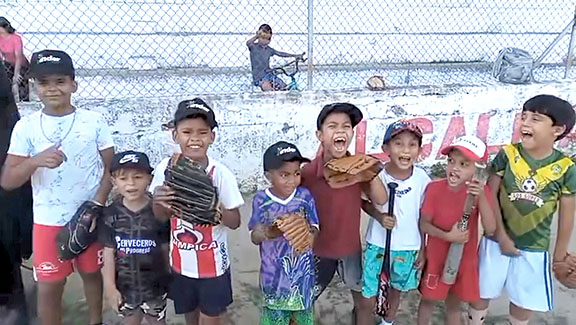
Although each swap gives away hundreds of pounds of equipment, leftovers inevitably remain. But nothing goes to waste. Toll explained that they share leftovers with local coaches, recreation programs, Lunch Break, the YMCA, and the Vin Gopal Pantry. Some leftovers even travel internationally; Rumson resident Betty Bedoya regularly brings suitcases of baseball equipment to the little town of Los Palmitos, Colombia. This long-distance freecycling began when her daughter Andrea, a REC intern, brought home leftover sports equipment from the swap and suggested her mom donate it to the Los Bravos baseball school in Colombia.
“It’s a little club that’s free to join, with 74 children ages 5-15 years in a very rural area. They’re always short on gear. Local resident Coach Perez started the school by himself so the kids would have something to do after school. He didn’t have much money, but baseball is a big part of the culture there,” Bedoya, who regularly travels to the region for work, said. The boys were beyond thrilled to get the gloves, socks and cleats.
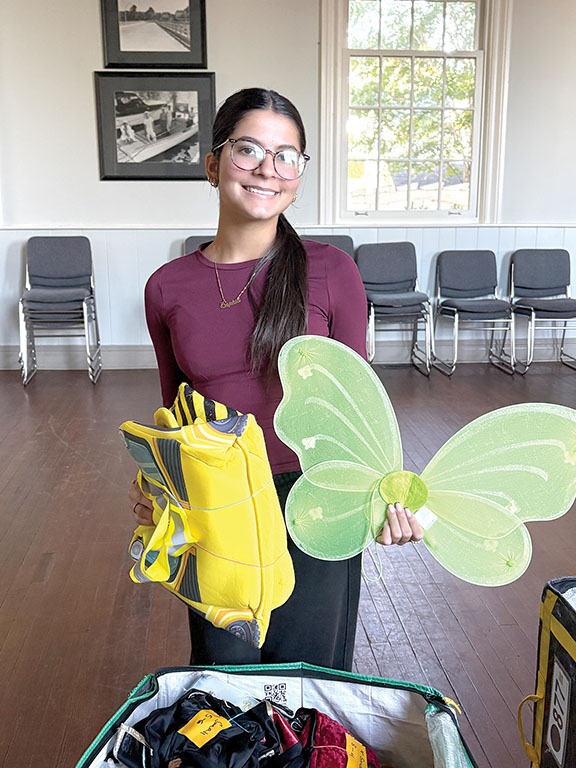
Normalizing reuse is a central goal of both the FHGT and the REC, which have expanded their efforts beyond sports. Each autumn, the REC partners with the PTO to collect pre-worn adult and children’s Halloween costumes. Volunteers sort and pack donations at a lively community event and deliver them to Lunch Break for their clients.
This year, the REC also ran a school supplies drive, which collected gently used pens, pencils, backpacks, binders and reusable lunch bags. The supplies were donated to local recipients, including childcare facilities and Lunch Break. Bedoya even brought some to Colombia to donate to a day center for people with Alzheimer’s disease.
Clearly, nothing needs to be wasted; there is always another home if we just look around.
Donations of gently used sports equipment for the spring Sports Swap can be made by contacting the Fair Haven Green Team at fhgtfairhaven@gmail.com.
This article originally appeared in the November 5-11, 2026 print edition of The Two River Times.