By Stephen Appezzato
The New Jersey Department of Human Services just made it a little easier for more residents to receive prescription drug payment relief.
While welcomed, some are concerned the expansions are not enough.
The state agency expanded income eligibility limits by $10,000 for two programs designed for seniors and people with disabilities in an attempt to help those who struggle to afford medications. The Pharmaceutical Assistance to the Aged and Disabled (PAAD) and the Senior Gold programs slash prescription drug prices for qualifying individuals. With the cost of medication continuing to increase, the state hopes more will apply to these programs.
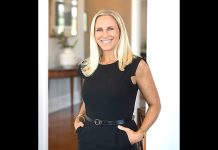
“Drug costs in the U.S. have climbed to a point where they are a concern for the average person. Too often do we hear stories of residents who are choosing between buying groceries and purchasing necessary medications,” said Assemblywoman Margie Donlon (D-11). “The people of New Jersey deserve to go to the pharmacy without fear that their medications will have a drastic impact on them financially,” she said.
In light of rising costs of living, Donlon said these program expansions were a good start.
As a practicing physician, she said all patients are worried about the cost of their care.
“When a patient needs a new prescription, that unexpected cost requires them to shift their whole budget. Not only is the weight of a possible health issue weighing on our patients but so is the possibility of not being able to afford the drugs necessary to maintain their health,” she said.
“When prescribing a new medication, physicians have to consider whether a patient will be able to afford the medication – because if affordability is a concern – then compliance with taking it will obviously be an issue,” she explained.
While a step in the right direction, local pharmacist, pharmacy owner and CEO of Legacy Pharmacy Group Ritesh Shah is concerned these programs still do not provide enough relief to residents.
“Listen, any help is a good help,” Shah said. “They’re starting with seniors, especially those on a fixed income now, but there are so many (who need assistance),” like those with high deductible insurance plans, he said.
“If you’re making $50,000-$60,000 and a company offers you a health care plan, if your premium is high and your copays are high, it’s still a hurdle, still a challenge,” he said.
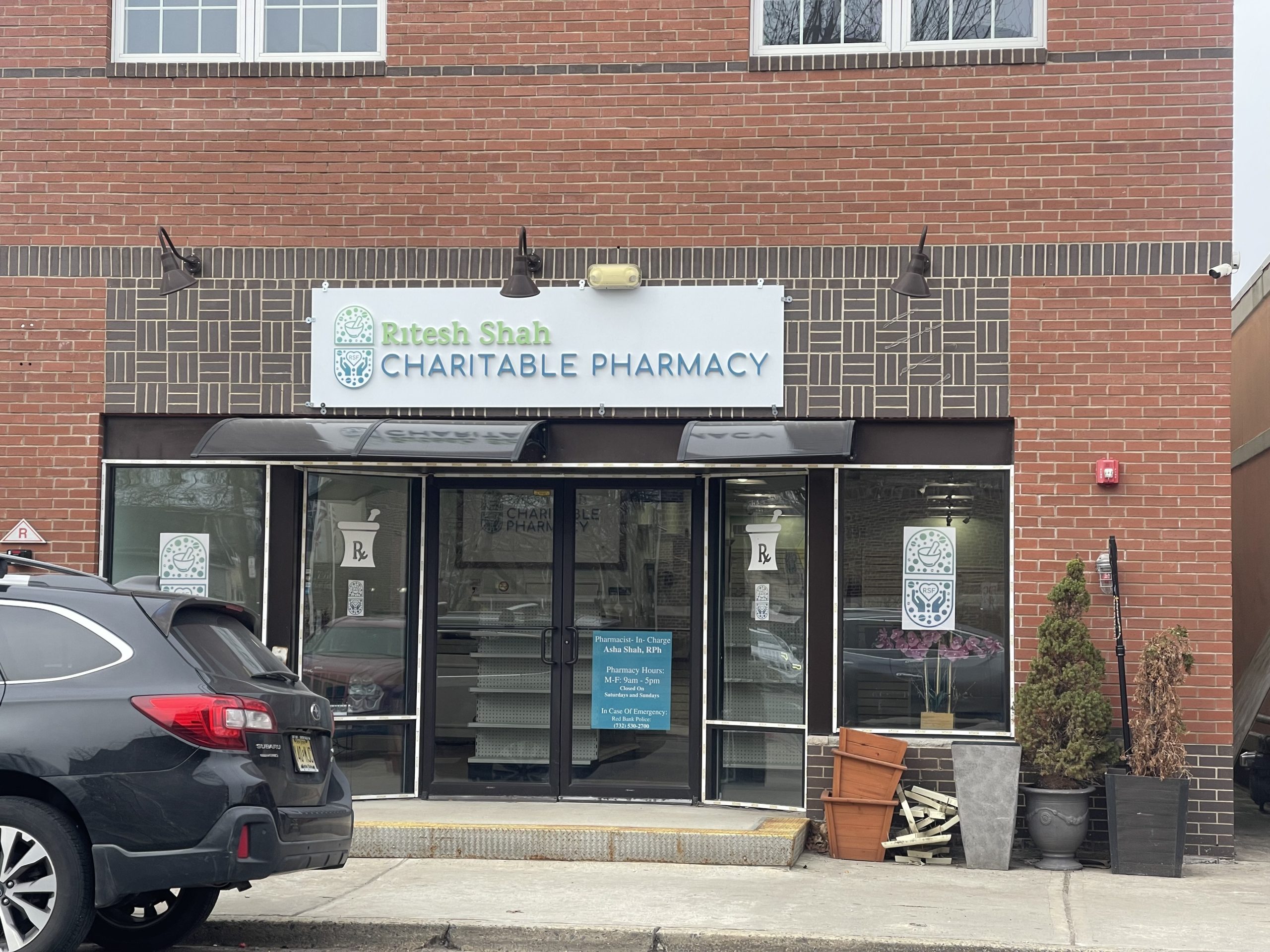
Shah, who has owned and operated pharmacies for years, including the state’s first charitable pharmacy located in Red Bank, has noticed the cost of prescription drugs steadily increase year-over-year.
“It’s just a rigged system,” Shah said. “It is so broken.”
“For something that costs $100, by the time it goes to the consumer and the pharmacy from the wholesaler it becomes close to two or three hundred dollars,” he said, pointing to manufacturer rebates and many “middlemen” as to why prescriptions are so costly.
Shah and his wife Asha opened their charitable pharmacy on Shrewsbury Avenue, offering medications to uninsured residents who live 300% below the federal poverty line.
“Amoxicillin – I always give this example – is 50 cents in a European country and then the same Amoxicillin when it comes to the United States and insurance billing becomes like 10, 15 dollars,” he said. Shah pointed to insulin as another example of how the price of a drug is not only based on simple economics.
“All of a sudden, the insulin price became less than half. What happened? Magic?” he posed. Magic was not the cause: Last year, a clause in President Joe Biden’s Inflation Reduction Act capped the cost of insulin for those on Medicare to $35 a month in an attempt to combat inflated insulin prices.
The PAAD program cuts prescription prices to a $5 copay for many generic drugs and a $7 copay for covered name-brand drugs. PAAD yearly income limits are now $52,142 for individuals and $59,209 for couples, regardless of their assets.
The Senior Gold program applies to individuals making up to $62,142 and couples making up to $69,209, and decreases drug prices by half after a $15 copay. For Senior Gold, once a single filer reaches $2,000 in out-of-pocket costs in a year, participants only pay the $15 copay. The same applies to couples who surpass $3,000 in payments during a year.
Those 65 or older or those with disabilities are eligible for both programs. Applicants must also have a Medicare Part D plan (prescription drug coverage through Medicare).
The income threshold increases are part of a state campaign to enroll more residents in these programs and raise awareness of them. By April, every retail pharmacy in New Jersey must display PAAD and Senior Gold materials, allowing older adults and disabled individuals to explore more about prescription savings.
New enrollees will also be reimbursed for the amount they would have saved on prescription purchases under these programs up to 30 days prior to applying for relief. Residents are urged to apply on njsave.org. Funding for the program expansions was allotted in the 2024 state budget.
But Shah also pointed to “donut holes” as an issue for many seniors. A health insurance term, donut holes occur when a person runs out of their Medicare prescription allowance for the year and must then pay for medication until they reach their out-of-pocket threshold. “They can’t even afford their medication even though the price is discounted by insurance. It’s a joke,” he said.
Since his charitable pharmacy opened Shah has noticed a slow but steady increase in the need for its services. Rising costs for medications “are getting unbearable,” he said.
According to the U.S. Department of Health and Human Services, drug manufacturers can change the list prices of their medications at any time after launch. From January 2022 to January 2023, more than 4,200 medications increased in price – 46% of these were greater than the inflation rate. The agency concluded high prescription prices create large affordability challenges for patients, health care payers, employers and taxpayers. Donlon said these soaring prices are due to a lack of transparency.
“Pharmaceutical companies, insurers and other interested parties are able to meet privately to discuss drug costs, without ever having to offer an explanation to the public. Consumers should be able to know what factors are contributing to the prices they are paying at the pharmacy,” Donlon said.
“If we want to ensure that seniors are able to stay in New Jersey, then making prescriptions affordable needs to be a part of the conversation. However, we know that high prescription drug costs are an issue that is impacting all residents. The state should explore further options on how we can ensure that common medications are affordable for all residents, not just seniors and those who qualify for Medicaid,” Donlon said.
The article originally appeared in the February 8 –14, 2024 print edition of The Two River Times.