By Laura D.C. Kolnoski
OCEANPORT—Lighting, signage, traffic and operating hours emerged as concerns during Netflix’s almost four-hour presentation of its planned new production studios on Fort Monmouth.
Appearing before the Oceanport Planning and Zoning Board Nov. 12, professionals who designed aspects of Netflix Studios Fort Monmouth detailed project specifics involving only 39 of the 292 acres it intends to purchase from the Fort Monmouth Economic Revitalization Authority (FMERA). Time ran out before the testimony concluded, carrying the meeting to the next board meeting Nov. 26.
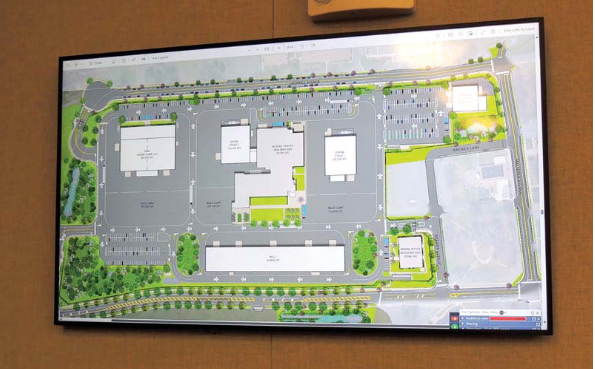
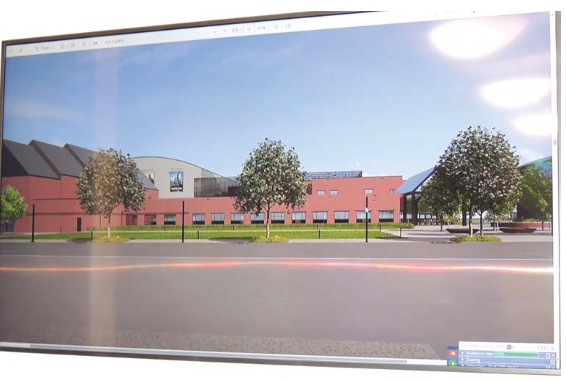
The former McAfee Center parcel on Route 537 (Avenue of Memories through the fort) will be the first to be redeveloped. The site’s 1997 red brick research and development building, which will be renovated, is named for Dr. Walter McAfee, a mathematical physicist who pioneered the development of radar in the mid-20th century. The nearby FMERA building, the fort’s former library, will be incorporated into conference rooms for cast readings and more.
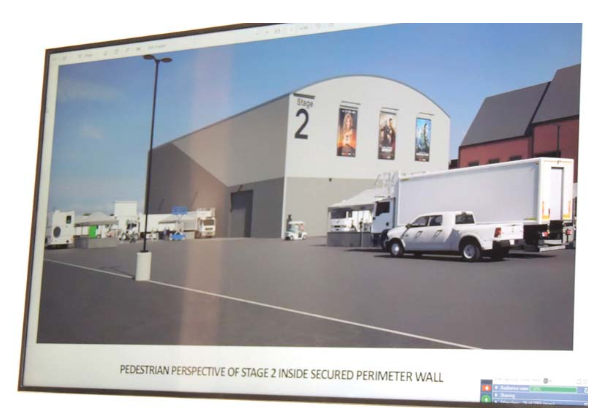
The parcel will contain four soundproof soundstages, a mill building, two business and production support offices and a warehouse, all within a secured perimeter. One of the soundstages will be a “twin” with a movable wall allowing for 83,555 square feet of usable space. Netflix hopes to begin construction by early 2026, said Kenneth Falcon, senior program manager for global studio design and senior manager for the Fort Monmouth project. The remainder of the acreage will be built out later with eight additional sound stages and support buildings which have not yet been fully designed, Falcon said. The studio complex will cover portions of Eatontown and Oceanport.
“This is a working studio,” he stated. “This is not a theme park like Universal in Florida. This is a closed studio where we make our product.” Employees will include management, security and about 200 to 500 cast and crew members depending on the production. Up to two productions can happen simultaneously.
Attorney Lisa John-Basta of Chiesa Shahinian & Giantomasi Law of Roseland moderated the presentation.
Netflix is requesting a variance for building signs showing the stage numbers, asking for an increase in height from 10 to 12 feet for visibility and easier identification by emergency services. Three design waivers are being sought, one for a 36-space outdoor bicycle parking area. To ensure cohesive development within the so-called Mega Parcel, “the property is subject to FMERA guidelines,” said township engineer Kevin Kennedy, adding, “FMERA regulations govern usages. The host municipalities govern site plan and bulk variance issues.”
Campus Specifics
Soundstages will be surrounded by “basecamps” for production-related vehicles and equipment including trailers for talent and staff, wardrobe, hair, makeup and catering. No food will be prepared on-site. The soundstages will have 20-by-20-foot “elephant doors,” so named as they are wide enough for pachyderms to walk through.
The main entrance will be through a security gate at the intersection of Avenue of Memories and Wilson Avenue. Avenue of Memories will be widened with new curbs and sidewalks. Sherrill Road will be converted to a dead end with a cul-de-sac.
Sets will be built in the soundproof mill, a prefabricated one-story structure with a painted metal façade where repairs and storage will also occur.
About 400 landscaped trees and shrubs will line the perimeter. Of the 200 old trees being removed, 50 percent were in fair, poor or dead condition.
The 546 parking spaces are dispersed throughout the site and include EV and golf cart spaces.
Initially, some cast and crew will stay at area hotels while others commute. Netflix employees are expected to eventually move into the area. A heliport is allowed, but Falcon said that is still being decided and “it will not be in Oceanport.”
Hours and Traffic
The discussion turned contentious after Falcon said the studio could operate around the clock seven days per week. Language in the planning professionals’ documents, however, states, “The Studio will operate typically from 5:00 a.m. to 11:00 p.m. on weekdays, with occasional operation late into the evening and on weekends. Depending on (their role), employees and cast will arrive to the studio between 5:00 a.m. and 10:00 a.m. and depart after 3:00 p.m. Productions often run into the evening, keeping employees on the site until after midnight.”
“The studio is not 100% occupied at all times; more like 60%,” Falcon testified. “Some things are filmed offsite on location, plus there’s a 12-hour off time during shifts as per union rules. People flow in and out at different times of day. No one stays there overnight.”
“This is going to be an area of issue we will have to address at some point,” said board member Leslie Widdis.
To predict traffic generation, Karl Pehnke of Langan Engineering used time stamps from Netflix’s other large studios during productions and examined traffic patterns from when Fort Monmouth was still operating in 2007. A typical workday that year saw approximately 11,418 vehicles entering the base. This first construction phase is expected to generate approximately 106 vehicular trips during weekday morning peak hours and 64 trips during weekday evening peak hours, which Pehnke called “a very low and moderate traffic flow.”
“Trucks will be about 70% box trucks and 30% trailer utility vehicles,” he said. “Tractor trailers are a very small component.”
Lights, Signs and the Perimeter Wall
Twenty-five-foot black streetlights will be installed along the Avenue of Memories. Signs on the interior buildings caught board members’ attention. As mentioned, Netflix wants the size of stage numbers increased by 2 feet. Interchangeable lighted signs highlighting current productions, also called posters, are planned for the exteriors of the soundstages and the mill. Board members said they want the lights off at night and not facing residential properties.
“The intent is to have the posters lit dusk to dawn,” said John-Basta, adding, “The signs are programming posters, not advertising. The closest residential property is 380 feet away. FMERA is supportive of the variance requests.”
Board members also expressed concerns over the 8- to 10-foot wall that will surround the campus, planned in four different styles, some solid concrete and others with open rails “for visual interest and to break the feeling of the complex being completely walled off,” said Chris Cirrotti, a civil engineer for Langan Engineering.
Netflix must make similar presentations to Eatontown, Tinton Falls and Monmouth County officials.
The article originally appeared in the November 21 – November 27, 2024 print edition of The Two River Times.