By Sunayana Prabhu
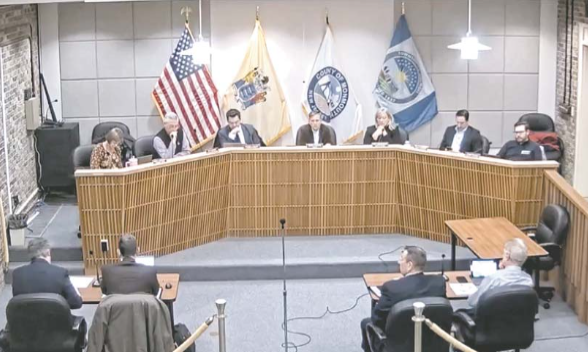
HOLMDEL – The township committee adopted a resolution in compliance with the state’s fair share housing law, reducing the state’s estimate of affordable housing number by 35 units. The resolution, which passed unanimously at the committee’s Jan. 30 meeting, was adopted “under protest” as the township continues its legal challenge to the state’s housing requirements.
New Jersey’s Department of Community Affairs (DCA) assigned nonbinding affordable housing estimates to municipalities in October, as required by the new Fair Share Housing Act that enforces the Mount Laurel doctrine – a state supreme court directive from the 1980s that compels municipalities to meet affordable housing requirements in 10-year cycles called “rounds,” ensuring housing opportunities for all. The fourth round of affordable housing obligation begins this year and runs through 2035.
According to the DCA calculations, Holmdel’s estimate for present need – existing units that need rehabilitation – is 129, while its prospective need – new construction – stands at 133. All the needs should be met over the next 10 years.
While the township has agreed to comply with the present need, it has lowered the prospective need number from 133 to 98. This reduction was determined following a detailed analysis by Holmdel’s planning team, led by professional planner Kendra Lelie.
The DCA initially listed nearly 86 acres in town as developable; the planners adjusted that to 1.23 acres based on household income, nonresidential valuations and land capacity factor. According to the planner’s memo attached to the resolution, the DCA’s land capacity analysis was “over-inclusive,” incorporating environmentally sensitive and deed-restricted areas, open space and parklands, public utility lands and other nondevelopable properties.
Andy Bayer, the township’s special counsel for affordable housing, explained that the reduction “is significant” because developing 98 units instead of 133 reduces the overall housing to be built in the next 10 years by “approximately 150” when considering the usual 20% affordable housing set-aside. For a project to be financially viable, developers typically include 20% for affordable units while 80% are market-rate units.
Although the township is part of ongoing litigation with other municipalities about the DCA’s methodology, Bayer recommended township officials comply with the state’s housing calendar, which required municipalities submit their housing obligations by Jan. 31. “By at least moving forward and adopting this resolution, you will retain immunity from builder’s remedy litigation,” Bayer advised.
Builder’s remedy lawsuits are part of the Fair Share Housing Act. They allow developers to sue towns that deny their proposals for affordable housing projects. If a municipality loses such a lawsuit, it risks forfeiting control over its zoning, potentially opening the door for developers to build high-density projects on properties the town would not have otherwise approved. The threat of these builder’s remedy lawsuits is intended to incentivize towns to proactively plan for and accommodate their fair share of affordable housing.
A coalition of more than a dozen municipalities, including Holmdel, is actively challenging the state’s fair share housing requirements in an ongoing lawsuit, citing infrastructure challenges due to over-development within their borders.
The latest court ruling came Jan. 27, when a Mercer County Superior Court judge denied the coalition’s second request to temporarily halt the implementation of the affordable housing law. This is the fifth time courts have rejected efforts to pause the legislation.
“Regrettably,” Holmdel’s attorney Michael Collins noted during the township’s meeting, “we’re left to try and dispel” the state’s data, he said, noting inaccuracies in the methodologies used by DCA to calculate municipal housing obligations. “You’ll see the insanity that we’re dealing with,” Collins said, referring to DCA’s list of Holmdel’s developable land that includes portions of the PNC Bank Arts Center and the Holmdel Swim Club – a designation township officials strongly dispute for those properties.
The Fair Share Housing Center, a nonprofit that advocates for affordable housing, recently said in a statement that the municipalities involved in the lawsuit were “many of the wealthiest and most historically exclusionary in the state.” Regardless, the municipalities have resolved to take their case to the state’s highest court.
Holmdel’s next step will be developing a housing plan by the state’s June 30 deadline. The plan is essentially the township’s “affordable housing strategy document,” Bayer said. That document must be approved by the planning board and the township committee in the upcoming months.
The article originally appeared in the February 6 – 12, 2025 print edition of The Two River Times.