By Sunayana Prabhu
COLTS NECK – While the township is gearing up to meet its state-mandated affordable housing obligations, the school board is expressing “deep disappointment” about how these mandates will impact the district over the next 10 years. But the township mayor assured school board members at their recent meeting that the housing mandates will be manageable, and that the township has been preparing for the changes for the past year.
The township committee approved a resolution at its Jan. 29 meeting to accept the state’s estimate of 101 units to be built over the next 10 years as part of the state’s fourth round of affordable housing obligations under the Fair Share Housing Act. Meanwhile, the district’s school board has voiced strong concerns about the state mandates, as included in a resolution passed at its most recent meeting.
According to estimates calculated by the New Jersey Department of Community Affairs (DCA), as directed by the state’s Fair Share Housing law, the township has been assigned zero units for present need, referring to the rehabilitation and repair of existing housing, and 101 units for prospective need, or new construction planned for the next 10 years as part of the fourth-round affordable housing obligations (2025-2035).
The DCA set a deadline of Jan. 31 for all municipalities in the state to either adopt a resolution with their own calculations or comply with the DCA’s estimate. Colts Neck officials accepted DCA’s estimate and adopted the resolution. Complying with the state mandate protects the town from exclusionary zoning litigation or builder’s remedy lawsuits and allows the municipality to maintain control over its zoning and planning decisions.
The resolution also stated that within two days, the township would file for approval from New Jersey’s Affordable Housing Dispute Resolution Program and the court regarding the town’s affordable housing responsibilities, while preserving the town’s right to modify those obligations if necessary.
‘Strain’ On Schools
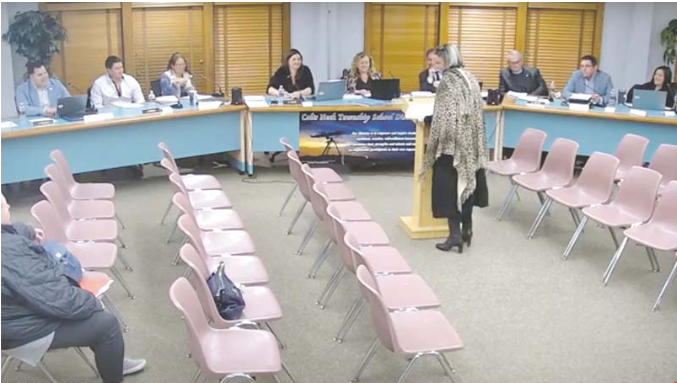
However, an influx of new students from the potential developments will put an added “strain” on the school system, the Colts Neck Board of Education (BOE) said in a resolution adopted at its Feb. 5 meeting. The board members worded the resolution expressing “deep disappointment in the affordable housing mandates” imposed by the state, in addition to the “lack of actionable data” from the township and Monmouth County regarding impacts to taxpayers.
The resolution, initiated by BOE members Kevin Walsh and Robert Scales, warns that the additional housing developments will lead to increased student enrollment, overcrowding and financial strain on local taxpayers to fund necessary expansions, faculty hiring and educational resources.
The board argued that “the financial responsibility for accommodating increased school-age populations due to these developments is unfairly placed upon local property taxpayers, with no corresponding increase in state aid to offset the cost of additional students, infrastructure, and educational services.”
The board members also voiced disappointment with the township committee’s handling of the issue, claiming a “lack of open communication and clear planning” from the township committee regarding the long-term financial and educational impact of the state-imposed policies on the school system and community.
The resolution was also critical about one of the most controversial affordable housing plans called Livana Square, previously known as Colts Neck Manor, by developer Kushner Co. that was approved by the township and county amid strong pushback from residents and environmentalists. The Livana Square development is situated on an environmentally sensitive site near the Yellow Brook, which flows into the Swimming River Reservoir. The resolution states, “the township committee, planning board, and county commission have failed to conduct a thorough assessment of the potential impacts on the existing water supply, which could directly affect the students of the Colts Neck School District. A failure in the wastewater system could compromise the drinking water supply, endangering not only our students but also more than 300,000 residents of Monmouth County.”
While the board noted it remains grateful for the township committee’s shared-services initiatives and dedication to the schools it is urging officials including state legislators and the governor’s office to reassess these mandates considering the infrastructure and educational costs borne by municipalities and school districts because of the increased development.
Board member Walsh said “the impact of affordable housing on our taxes is unfair. It’s unfair to our taxpayer. It’s unfair to our residents. It’s going to be unaffordable to live in our town.”
“I am deeply disappointed our township committee did not communicate much earlier the impact of affordable housing obligations to our school community,” Walsh said during the meeting. “This delay in open transparency is affecting our ability as a Board of Education to properly prepare long-term financial budgets for the certain large influx of students.”
Walsh noted that the township planning board held a public hearing on the affordable housing obligations Jan. 14, which he said was “too little, too late.” He stated the school board had to request affordable housing data from the township, rather than the information being proactively provided. “I believe round four obligations will result in over 500 units that we are responsible for, and the possibility of 100 to 200 students,” Walsh said. Those numbers are an approximation made considering that 20% is designated for affordable housing by developers while 80% of the remaining units are market-rate to make the project financially viable.
Mayor Reacts
Colts Neck Mayor Tara Torchia Buss, who attended the BOE meeting, addressed the concerns but defended the township’s approach to the issue. “I find that comment – the lack of transparency and open communication – completely incorrect and false. I have always had a wonderful relationship with the business administrator and the superintendent. We have been very open and transparent,” Buss said.
The mayor expressed optimism about the township’s planning for incoming affordable housing developments, adding that she does not anticipate “shovel in the ground” for these projects. “I don’t believe you guys will see an increase in affordable housing. That’s what I believe. Whether or not that’s the case that remains to be seen.”
In addition to the resolution, Colts Neck has moved forward with several projects to help meet its affordable housing obligations. On Jan. 8, the township committee entered into an affordable housing developer’s agreement with Countryside Developers to transform the property at Block 42, Lot 4, commonly known as Charleston Meadows, into a 68-unit inclusionary housing development. The development will consist of 53 market-rate units and 15 affordable housing units.
The township’s planning board has also recently granted preliminary and final approval for a major subdivision plan by Roger Mumford Homes, LLC at Obre Road. This plan involves the creation of a 25-lot single-family residential community. The township will be collecting a closing fee from the developer that will be deposited into the township’s affordable housing fund, rather than building affordable housing on-site. The amount of the closing fee is not specified, as it can vary by town and may change over time, the company said. The development is still a couple years away from closing, with site development work happening this year and model homes expected to start early next year, according to the developer.
Meanwhile, the township committee has until June 30, 2025, as per the state-mandate to adopt a comprehensive plan to meet the affordable housing obligations. Once the affordable housing plan is prepared, the township will seek permanent immunity from exclusionary zoning lawsuits until 2035.
The article originally appeared in the February 20 – 26, 2025 print edition of The Two River Times.