By Sunayana Prabhu
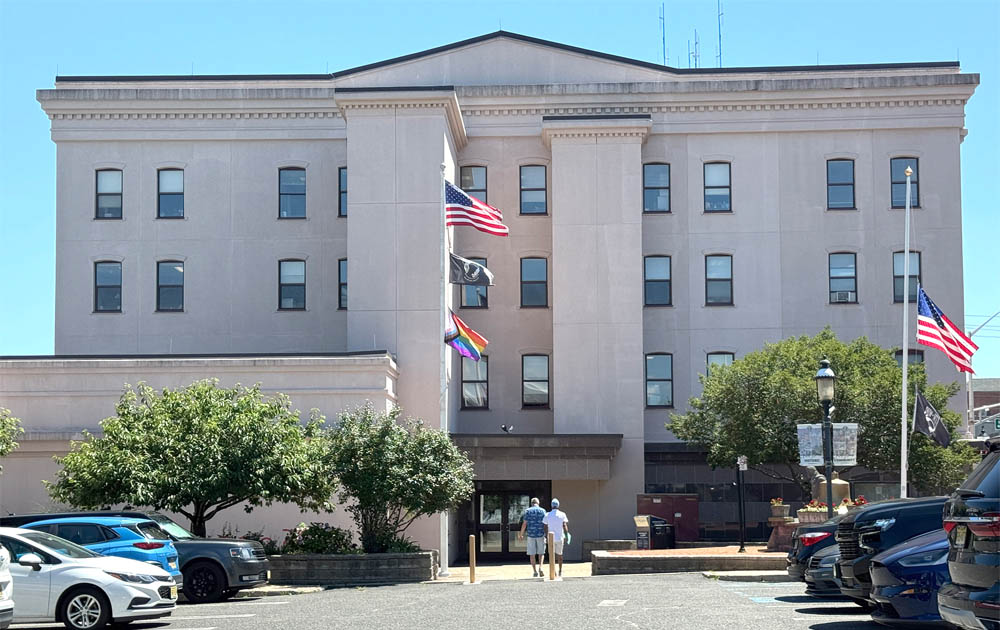
RED BANK – The borough council recently approved the construction of small hotels in town and cleared the way for homeowners to build new Accessory Dwelling Units (ADUs) – also called “granny units” – on their property.
In addition to these major zoning changes, the council imposed a ban on data centers within the borough’s borders, backed by another resolution to establish a statewide moratorium on new data centers.
ADUs and Boutique Hotels
The ordinance, adopted unanimously at the June 11 council meeting, allows ADUs in certain single-family zones subject to size, parking and owner-occupancy requirements. The ordinance will also allow small, mostly ownerrun hotels and bed-and-breakfasts in certain areas. According to borough officials, the small hotels are meant for adaptive reuse of existing buildings in line with the borough’s longterm planning goals.
Borough planning consultant Susan Favate called these zoning changes phase one of the 2023 Master Plan implementation. It is an attempt to create “gentle density,” Favate said, to allow small increases in housing options. “The intent is really that these don’t become sort of default multifamily rentals,” she said. “We’re trying to promote multigenerational living, whether the owner lives in the single-family home or the ADU, it could be either way.”
According to the borough ordinance, ADUs are intended for permanent residency and not permitted for short-term rentals.
“There were lots of conversations around not wanting the town to have a lot of rentals that were being taken as Airbnb. There was a concern about community and culture,” Deputy Mayor Kate Triggiano said. The creation of ADUs alleviates a lot of those concerns, she said, because it is intended for multigenerational living “to benefit the people who live there.”
According to the borough’s general provisions for ADUs, the unit can be attached to the single-family home or detached, such as a garage or extension of a remodeled dwelling. The units must be equipped with their own independent utilities and living facilities, such as a kitchen and bathroom, for one or more persons. ADUs are not permitted in basements, cellars or attics.
One ADU is permitted on a single-family home lot, according to the ordinance. The minimum lot size required to accommodate an ADU ranges from 7,500 to 30,000 square feet, depending on the designated zone. The size of an ADU is restricted to a maximum of 800 square feet and a minimum of 300 square feet. The ADU is deed-restricted as an affordable housing unit.
“The cost of housing in Red Bank is absurd,” councilmember Ben Forest said. “Properties on the West Side (of Red Bank) selling for a million dollars-plus mean housing in America is becoming a very precious and expensive thing, and many people of all ages are being priced out of owning homes or living anywhere,” he said. “We have homeless people in Red Bank, homeless people across the state and the country. So, we have to be creative in how to solve this problem, and it’s going to require a lot of things. This is a small part of it.”
“The many zoning changes that you saw tonight really did stem from our Master Plan of 2023,” said councilmember Kristina Bonatakis, who was part of the ADU subcommittee formed in 2024 along with councilmember Laura Janone and former councilmember David Cassidy.
Data Center Ban
Also included in the borough’s zoning overhaul is a ban on data centers.
“The borough’s banning of data centers was part of our phase one zoning overhaul,” Triggiano said. “We are prioritizing people.”
The council also unanimously passed an “Artificial Intelligence (AI) Accountability” resolution in support of “a statewide moratorium on new large-scaled data centers” until stronger regulations are in place.
Pushback against data centers has been escalating across the state. Recently, Sayreville, Asbury Park and several other municipalities imposed similar bans and called for a statewide pause on new data centers, citing heavy water and electricity use, as well as noise and air pollution.
Additionally, over 60 groups statewide, including environmental, labor, community and grassroots organizations, submitted a letter to Gov. Mikie Sherrill May 14 asking her to pause approving and constructing new data centers.
Data centers are large facilities that store, manage and process digital information, including information used for artificial intelligence applications. They house rows of tall equipment racks filled with servers, networking hardware and storage systems. According to the website datacentermaps.com, there are 67 data centers currently spread across the state.
Opposition to these centers has been mounting because they often consume enormous quantities of water for cooling and require robust power infrastructure, which can significantly drive up utility costs and burden nearby communities.
“At a time when water is more precious than ever, we cannot let data centers suck up all of the Garden State’s water and then spit it back out full of PFAS and other toxic contaminants,” said Amy Goldsmith, state director of Clean Water Action – and a borough resident – in a May 14 news release. “These closed-loop cooling systems leak like a sieve, exposing workers and communities to their health harms on a 24/7 basis. New Jersey cannot keep up with current PFAS levels found in soil, water and air. We certainly do not need the proliferation of a new statewide source.”
While no moratorium has been placed yet, Sherrill announced a four-part plan to rein in data center growth. The plan establishes “strong guardrails to protect communities, strengthen transparency, ensure these facilities invest in New Jersey’s energy infrastructure, and deliver good-paying jobs,” according to a May 27 statement.
“We will hold data centers accountable, ensure they contribute their fair share, and make sure our communities not only benefit from the AI innovation happening in our state, but have a real hand in shaping it,” Sherrill said in the statement.
The article originally appeared in the June 25 – July 1, 2026 print edition of The Two River Times.