By Regina Molaro
With America’s 250th approaching, many of us are taking the time to appreciate and remind ourselves of the Two River area’s great history. There are a few weeks until America’s big celebration, so let’s reflect on the significance of two towns: Tinton Falls and Shrewsbury.
Step back in time with a tour of the Crawford House in Tinton Falls or visit on June 13 for a Juneteenth event highlighting the roles of enslaved Blacks during the Revolution. Next stop: Shrewsbury, where, through May 31, the Monmouth County Library Eastern Branch is celebrating the borough’s 100th year of incorporation with a special exhibit. Be sure to catch it.
Tinton Falls
Known for the highest waterfall on New Jersey’s coastal plain, the charming town was originally referred to as “New Shrewsbury.” In 1975, the town was renamed Tinton Falls. Its moniker was inspired by a cascading waterfall on Pine Brook, formerly known as Falls River. It once stood roughly 30 feet high.
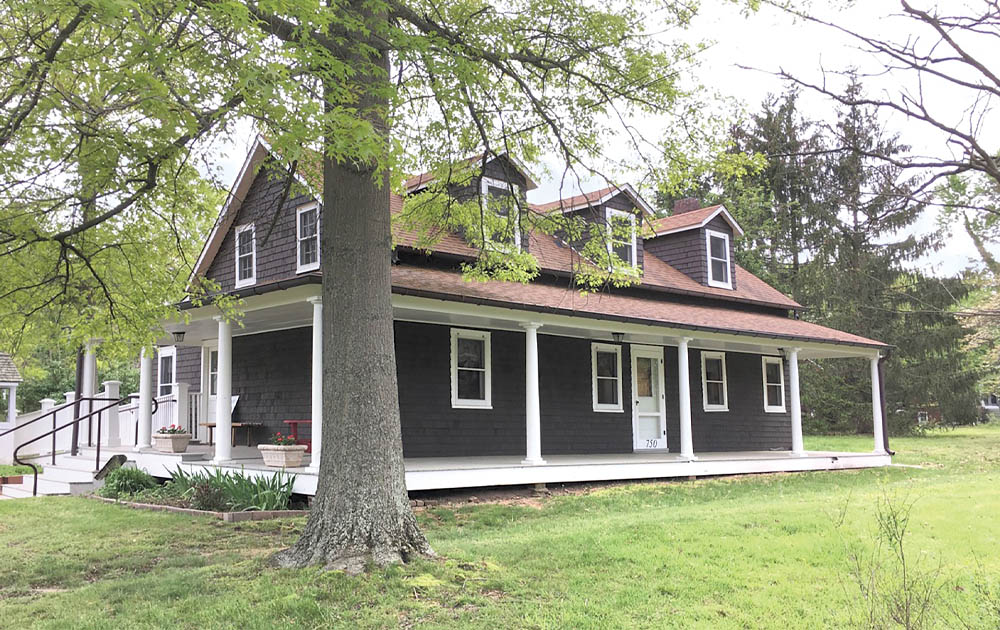
One of the town’s major historical attractions is the Crawford House. A focal point for preserving the town’s history, the Dutch-framed house was home to four generations of Crawfords. From 1865 to the mid-1960s, they managed their family’s slaughterhouse and butcher shop, which was founded by John H. Crawford and his wife, Rebecca. It was housed on the property, and the couple raised their eight children in the house.
In 1897, John H. retired and left his sons, John C. and Albert B., in charge of the business. He and his wife later sold the house to John and his wife Ella. John also ran the general store, which delivered groceries to surrounding farms.
In 1924, another change occurred. John and Ella’s son, Allen E. Crawford, took ownership of the house and business. He and his wife, Ruth, continued to manage the butchering business while also serving as the town’s tax collectors. In 1973, the couple’s daughter Ann took over as tax collector until the mid-1980s.
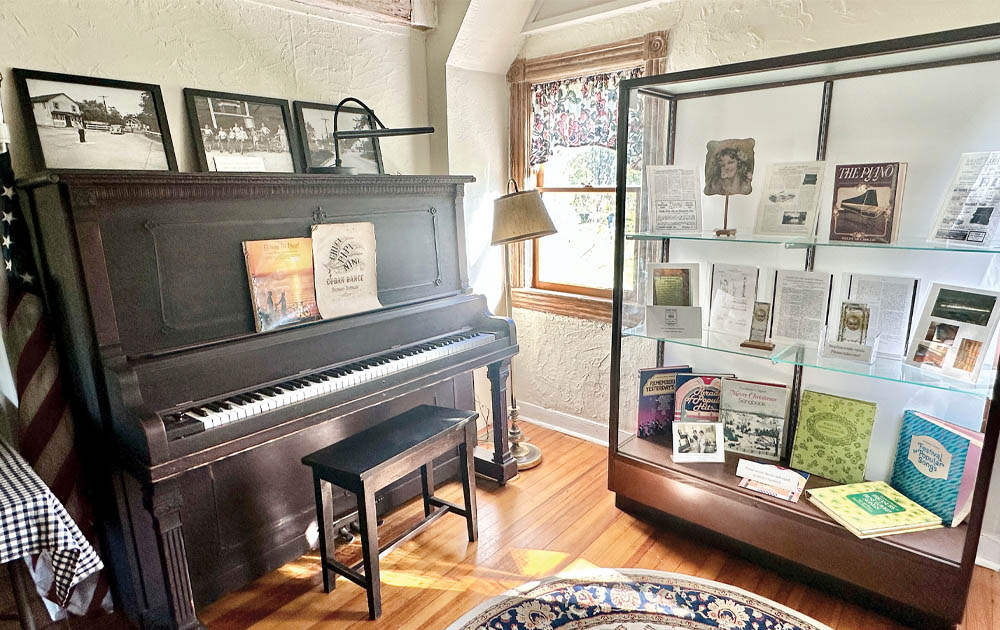
The Crawford House is still home to Ruth’s piano, a rare changeable pitch piano. It contains a mechanism that allows the instrument to change pitch by a semitone without requiring re-tuning. At the beginning of the 20th century, only a few thousand were made; only a fraction remains, according to a 2018 evaluation made by Curro Piano Service in Lumberton. After Ruth’s death in 1987, the house was transferred out of the family’s hands. It is currently owned by the borough and has been renovated for public use.
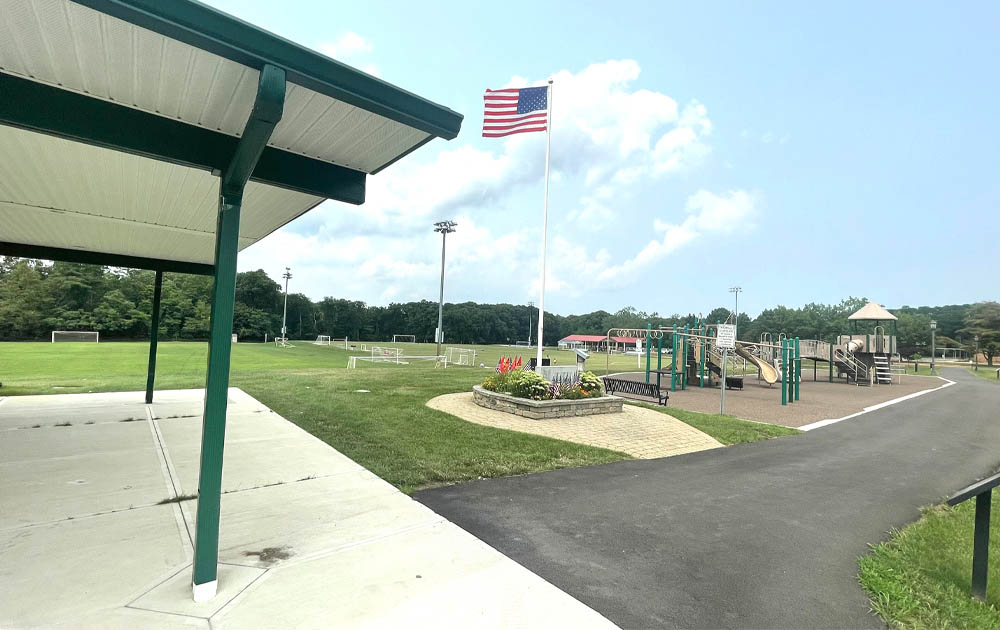
Tinton Falls also offers some great parks and recreation facilities. Among them is Hockhockson Park, which features a basketball court, three baseball fields, a playground and sand volleyball courts. It is located at 295 Hockhockson Road.
There’s also Liberty Park II at 1420 West Park Ave. It’s an ideal destination for getting your steps in on the walking trail, bringing your furry friend to the dog park, or clocking in some solo time at the gazebo sitting area. Those who yearn to move, play and engage in friendly competition can hit the softball fields, basketball courts or two football fields/open fields. There’s also a playground and swings.
Events
In the upcoming weeks, a few special events are being held at Crawford House. A Juneteenth event will be held at 2 p.m. June 13, featuring a one-woman performance that brings history to life. Reenactor Leslie Bramlett will portray Hannah Till, a cook and servant to Gen. George Washington during the American Revolution.
“She is a perfect fit for our 250th theme, highlighting one of the roles played by enslaved Blacks during the Revolution,” said Stacey Slowinski, chair of Tinton Falls Preservation Commission. The Juneteenth event is free; registration is not required.
Visitors to the Crawford House will also learn about the early history of Tinton Falls.
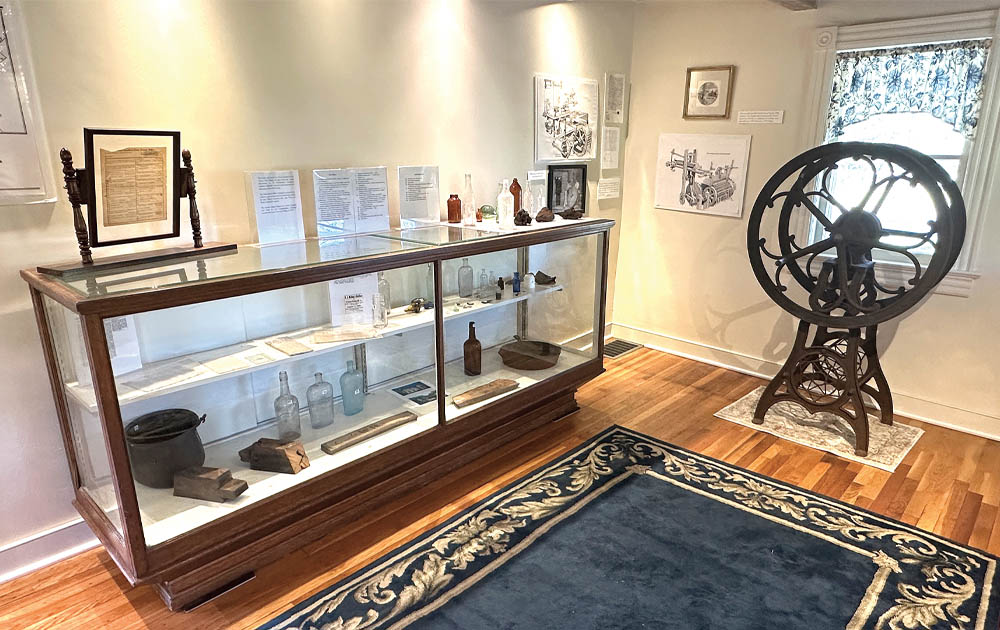
“We have information about Lewis Morris’ 17th-century ironworks on display, with a focus on the enslaved Blacks he brought here from Barbados. On the property is the site of a burial ground for those enslaved persons. In the house, we have a working model of how the waterfalls would have powered the ironworks,” Slowinski said.
Of course, the house features information about the Crawford family. The foundation of their butcher shop is exposed, and nearby signage explains that portion of the Crawford family history. Inside the house are artifacts donated by the family, including knives used at the butcher shop and Ruth’s piano, which has been restored and is playable.
Dedicated to preserving, protecting and promoting local history and natural resource conservation, the Friends of the Crawford House is a nonprofit organization that makes this possible via displays, programs, tours and other educational activities. The organization also offers public information about local nature trails and ecology.
In 2009, a community garden was established that enables residents to grow their own produce. It also gives the Friends of the Crawford House space to grow vegetables to sell at its farm stand. Due to the garden’s popularity, a second community garden was built in 2015 on Water Street.
During the summer, Crawford House is open every Saturday morning while the farm stand is operating (typically, mid-July through mid-September, depending on weather and crop availability). For more information about upcoming events, visit the website or follow Crawford House on social media.
750 Tinton Ave., thecrawfordhouse.org
Shrewsbury
Shrewsbury is designated “the cradle of civilization in Monmouth County,” said Don Burden, president of the Shrewsbury Historical Society, who was also mayor of the borough from 2010 to 2018.
According to the borough, Shrewsbury was formed by an act of the New Jersey Legislature March 22, 1926; its name comes from Shrewsbury, England.
Noted for its famous “Four Corners” at the intersection of Sycamore Avenue and Broad Street (Route 35), Shrewsbury boasts four properties that are listed on the National Register. The sites include Christ Church Shrewsbury, The Quaker Meeting House, The Allen House and The Wardell House.
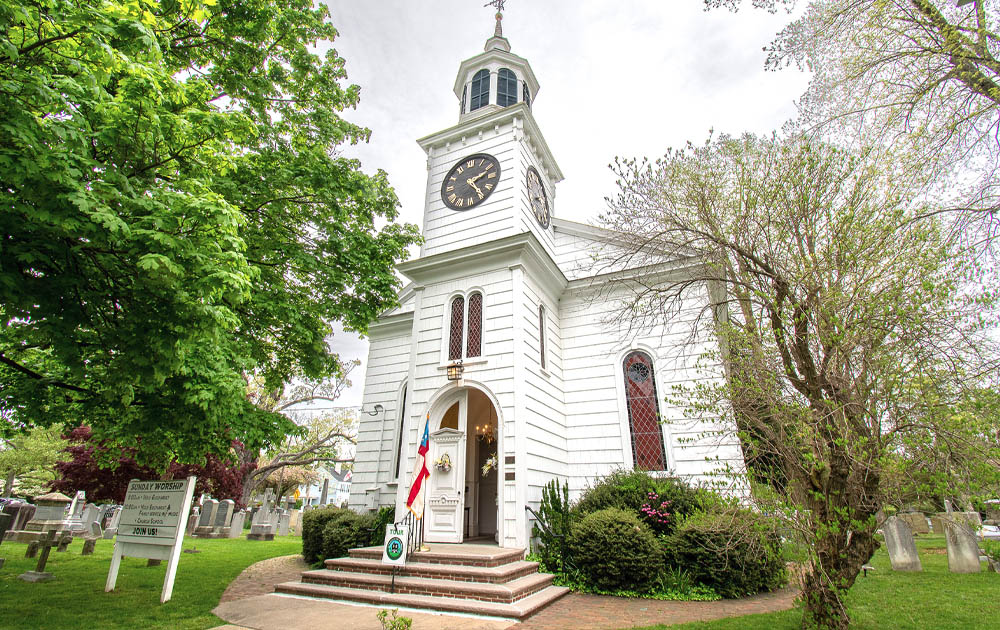
Christ Church Shrewsbury
Established in 1702, the Christ Church of Shrewsbury was built between 1769 and 1775. At one point during the Revolutionary War, the church was occupied by American soldiers who used it as a barracks. The church, now Episcopal, was previously Anglican (the “Church of England”) and a symbol of the British Crown. In protest, American soldiers fired musket shots at the church’s pulpit and the orb
and crown on the steeple.
Quaker Meetinghouse
Early meetings for worship were held in the homes of members. The first meetinghouse was built in 1672 and was visited that year by George Fox, the founder of Quakerism. It was a single-room wood structure located about one mile east of the current meetinghouse in what is now Little Silver.
Shrewsbury Meetinghouse remains essentially original except for the roof and the interior of the east room, which was severely damaged by a fire in 1968. The room was remodeled to provide a fellowship hall, kitchen,
and restrooms.
Shrewsburyquakers.org cites that the meetinghouse was rebuilt in its prese-nt form in 1816 and is listed on the state and national registries of historic places. The public is welcome to visit its cemetery, which features the names of local settlers.
The Allen House
According to the borough website, during the Revolutionary War, the Allen House operated as a tavern. Its name traces back to the house’s original owner, Judah Allen. Coincidentally, in the early 1800s, the house was owned by another man, Dr. Edmund Allen, who was most likely unrelated. The house was used as a medical practice.
From the mid-1700s to the early 1800s, the house was used as a tavern, operated at times by various people. At the time, taverns served multiple purposes. In addition to serving alcohol and food, they offered lodging to travelers. They also served as meeting spaces for town meetings, legal courts, and elections.
We know it’s a bit early, but make sure you keep your calendar clear at 9 a.m. July 4 for a reading of the Declaration of Independence at the Allen House. House tours of the 18th-century Blue Ball Tavern will follow. Bring your family and friends and don’t forget your lawn chairs. The annual event, made even more special this year in light of America’s 250th, is hosted by the Monmouth County Historical Association.
And since the warmer weather has finally arrived, now is the time to make some plans to explore Shrewsbury’s parks solo or with family or friends. Check out Manson Park, which is located at the Borough Municipal Complex at the intersection of Broad Street (Route 35) and Sycamore Avenue. The park has a jogging/walking track, playground, Little League-size baseball/softball field and a full-size soccer field.
The Wardell House
Now closed to the public; it is a protected historic site.
Visit the Monmouth County Library Eastern Branch through May 31, where they are celebrating the Borough of Shrewsbury’s 100th year of incorporation (May 11, 1926) with an exhibit highlighting the borough’s history as it transitioned from a farming community to a residential community and now a bustling business corridor.
The display cases at the library entrance have been stocked with an assortment of items to spark the interest of local citizens and library patrons, including photographs, memorabilia and ephemera highlighting the borough’s significance to the county.
The library is located at 1001 Route 35, Shrewsbury.
The article originally appeared in the May 28 – June 3, 2026 print edition of The Two River Times.