By Sunayana Prabhu
RED BANK – In a significant development intended to promote transit-oriented growth, the Red Bank Planning Board greenlit a proposal to construct a four-story, 20-unit residential building near the train station.
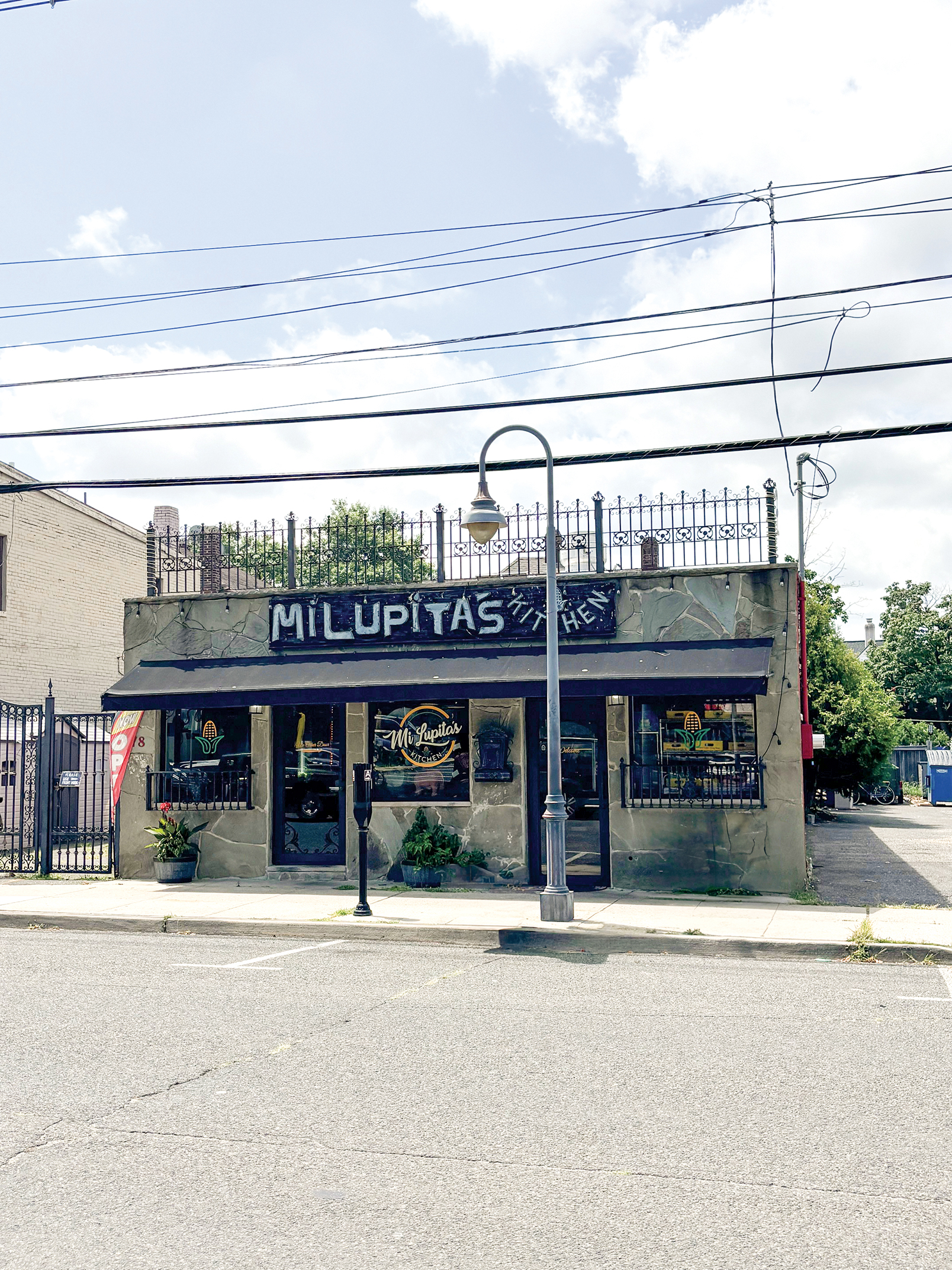
The project won unanimous approval at the July 24 planning board meeting. Proposed by American Opportunity Zone Fund LLC, the development at 78 Bridge Ave. will see three buildings demolished, two on Oakland Street and one on Bridge Avenue that houses Mi Lupita’s Kitchen. The four-story mixed-use building will include residences on the second, third and fourth floors with a mix of studio, one-bedroom and two-bedroom units, with three designated as affordable housing. The ground floor will include a 1,295-square-foot coffee shop and 1,000 square feet of additional commercial/retail space.
The planning board’s approval came after nearly a year of zoning board meetings in which the project faced public pushback over density concerns. At the Wednesday meeting, the project’s architects and engineers presented scaleddown plans explaining the revised low-density design.
The development was proposed last year as a donut-shaped rental building with a courtyard, but after the zoning board’s recommendations, the developer reduced the scale from 32 units to 20. “It’s a lot less dense. We have plenty of parking. We have three levels of units above the parking level,” said Michael Monroe, the project architect.
“There is no parking variance required. There’s no density variance required. So, what we tried to do was to tailor this as much as possible, to make it conform as much as possible to the municipal ordinances,” said Ed McKenna, attorney for American Opportunity.
Monroe noted the building has been crafted to blend with the neighborhood’s existing character. “We’re trying to respect the two-story feeling of the adjacent buildings. We have a lot of red brick in it like you see a lot of historic Red Bank buildings,” he said. “We want to put a nice impression so people (who) drive or come by the train every day (will) see that building and think it fits in.”
Over 50% of the structure’s roof will be “green,” including a green rooftop on the third floor that overlooks the train station.
Monroe noted the development will address the borough’s affordable housing requirements and include three designated units. “The affordable co-units are on the second floor, which is the first living level, and right adjacent to the gym,” said Monroe.
The development will include 46 at-grade parking spaces, with each residential unit assigned a dedicated space. Additionally, the plan calls for eight electric vehicle charging stations and indoor bicycle storage to encourage sustainable transportation options.
“We have plenty of parking. We have 40 spaces inside, seven or six on the outside,” said project engineer Jaclyn Flor.
Some of the board members suggested further reducing the number of on-street parking spaces and converting those areas into green spaces instead. Monroe agreed to explore this option. “If someone wants to take one or two (parking spaces) away and put trees, that’s fine with us, too,” he said.
Wendy Giguere and John Yurish, both borough residents, argued against the board’s suggestion to reduce parking spaces to add more trees. “It just sounded like this incredible amount of surplus parking,” Giguere said.
“There’s very little parking, and I feel that the person (developer) should be responsible for providing parking for their own visitors,” Yurish echoed.
The board emphasized creating the right balance be-tween adequate parking for the development and incorporating more green and open space elements but no decision was made during the meeting.
The project falls in the borough’s BR-1 zone (business/ residential) and the Train Station Overlay District (TSOD). According to the borough’s website, the purpose of the TSOD is to encourage a mix of retail and commercial uses at street level with increased residential density on floors above street level for a neighborhood that relies on public transportation as the primary means of travel. This project’s approval – in conjunction with recent developments like the Rail and the Anderson building that housed the former Sickles store – marks a significant milestone toward a transit-oriented neighborhood.
“This is an excellent example of good civic design, where Mr. Monroe and our team have tried to take into account the context-sensitive design of this,” said Christine Cafone, a licensed professional planner testifying on behalf of the applicant. She said the project is “substantially compliant” with the TSOD and encourages a “live-work-and-play without a car” lifestyle that is a benchmark of transit villages.
The article originally appeared in the August 1 – 7, 2024 print edition of The Two River Times.