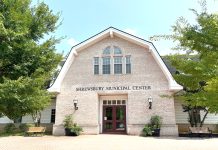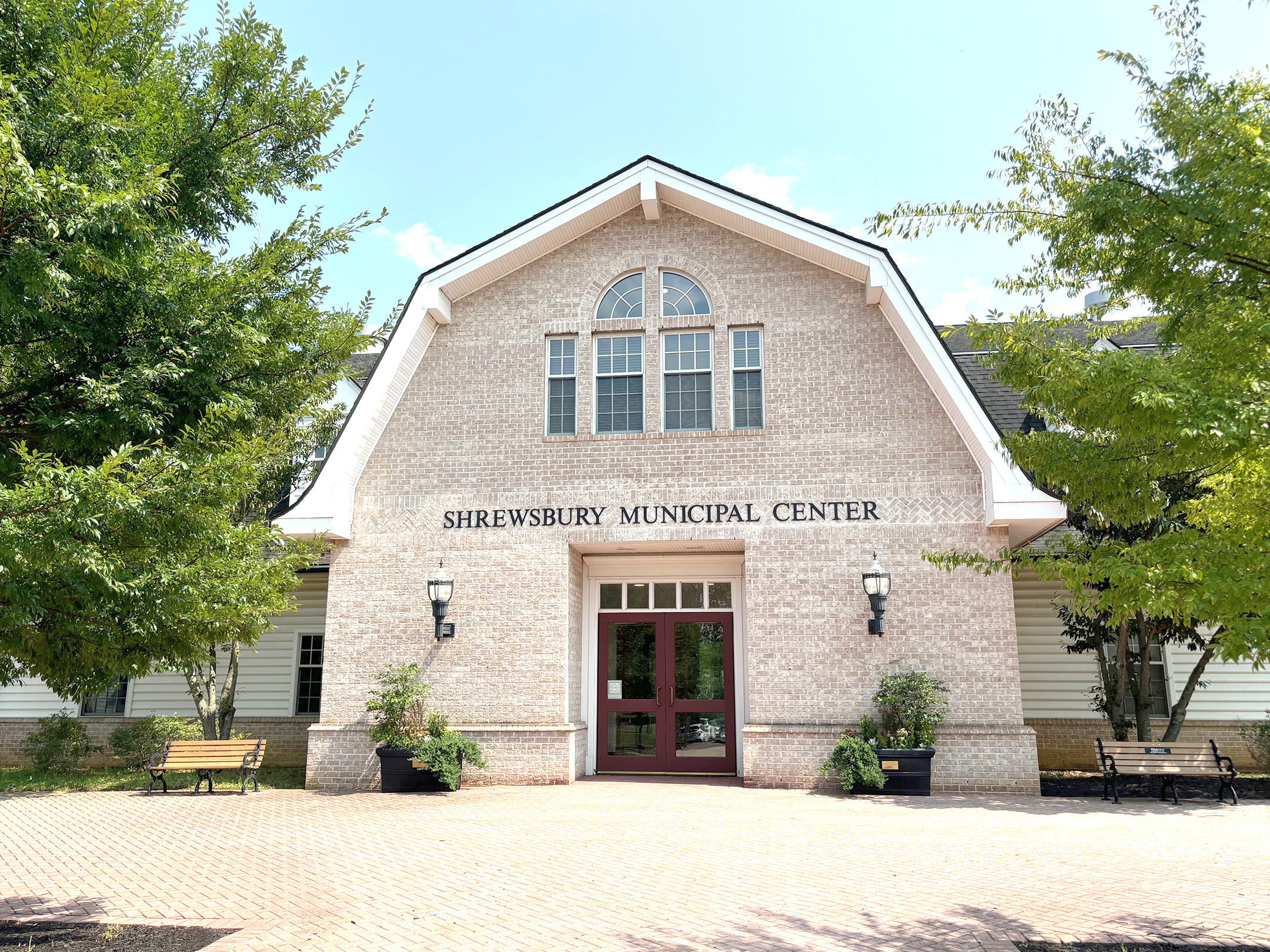
The Shrewsbury Borough Council adopted an ordinance this month establishing a fee structure for public requests for body-worn camera footage. Officials said the police department spends substantial time and specialized resources reviewing and redacting footage before it can be released, and the process can become a burden for taxpayers. File Photo
By Alli Tretina
SHREWSBURY – The borough council adopted an ordinance Sept. 8 that sets special service charges and a deposit requirement for Open Public Records Act requests seeking police body-worn or vehicle-mounted camera footage.
Ordinance 2026-1151 amends Chapter 42, Section 8 of the borough code. Officials said the police department spends substantial time and specialized resources reviewing and redacting footage before it can be released, and that some requesters never pick up the completed files, leaving taxpayers to absorb the cost.
“The ordinance was adopted to address the significant staff time and administrative effort required to review and redact body-worn camera (BWC) footage before it can be released,” Mayor Kimberly Eulner said.
“Unlike an ordinary records request, a request for BWC footage often requires a detailed, frame-by-frame review to identify and protect confidential, private or otherwise legally exempt information, as well as additional processing necessary to prepare the footage for release.”
She said the fee structure also responds to a rise in requests across New Jersey, including from nonresidents and third-party content creators, who she said make up the majority of those requests.
“Processing these requests can require substantial municipal resources,” Eulner said. “The fee structure is intended to help offset the actual costs associated with that work so those costs are not borne entirely by local taxpayers.”
Under the new rules, requesters will be charged $22 an hour for the labor of the lowest-paid clerical or administrative employee qualified to review and redact the digital files. Time will be billed in 15-minute increments, with any fraction rounded up.
Similar policies have been enacted or proposed in other local communities, including Middletown, Colts Neck and Sea Bright, following the same OPRA framework.
Requests for footage totaling less than 1.5 hours will be provided free if the redaction work is not unusually complex. Before any technical review begins, the records custodian must give the requester a written itemized estimate. The requester must then pay a nonrefundable deposit equal to 50% of that estimate. The balance is due in full before the redacted footage is released. If the actual cost is less than the deposit, the difference will be refunded.
The ordinance cites state law, which allows municipalities to recover the actual direct cost of producing records that require extraordinary time or effort.
Police Chief Adam Cerminaro said the department generates a large volume of footage because officers routinely record their interactions with the public. “Every call we go on, or any interaction that we have, is recorded,” Cerminaro said. “It’s a significant amount of time, hours upon hours.”
He said requests can require staff time to review and redact information such as license plates and driver’s licenses before release. The records clerk handles those redactions, he said.
“Every call is going to be different because certain calls have certain things that need to be redacted,” Cerminaro said.
Asked about the new ordinance, he said, “I don’t see any issue with it.”
Eulner said residents should understand that the cost of obtaining body-camera footage comes mainly from review and production, not from simply copying a file.
“For residents, the important point is that the cost associated with obtaining BWC footage is driven primarily by the staff time and resources necessary to review, redact, process and produce the footage – not simply the act of copying a public record,” she said.
“The borough remains committed to transparency and public access, while also ensuring that requests requiring substantial municipal resources are handled in a manner that is fair to the taxpayers who fund those resources.”
The measure was introduced July 14 by council member Daniel Levy and received a second reading and public hearing Sept. 8. Levy was not present for the adoption vote, but the council approved the ordinance unanimously among members in attendance. It takes effect immediately upon publication as required by state law.
This article originally appeared in the September 24-30, 2026 print edition of The Two River Times.