By Sunayana Prabhu
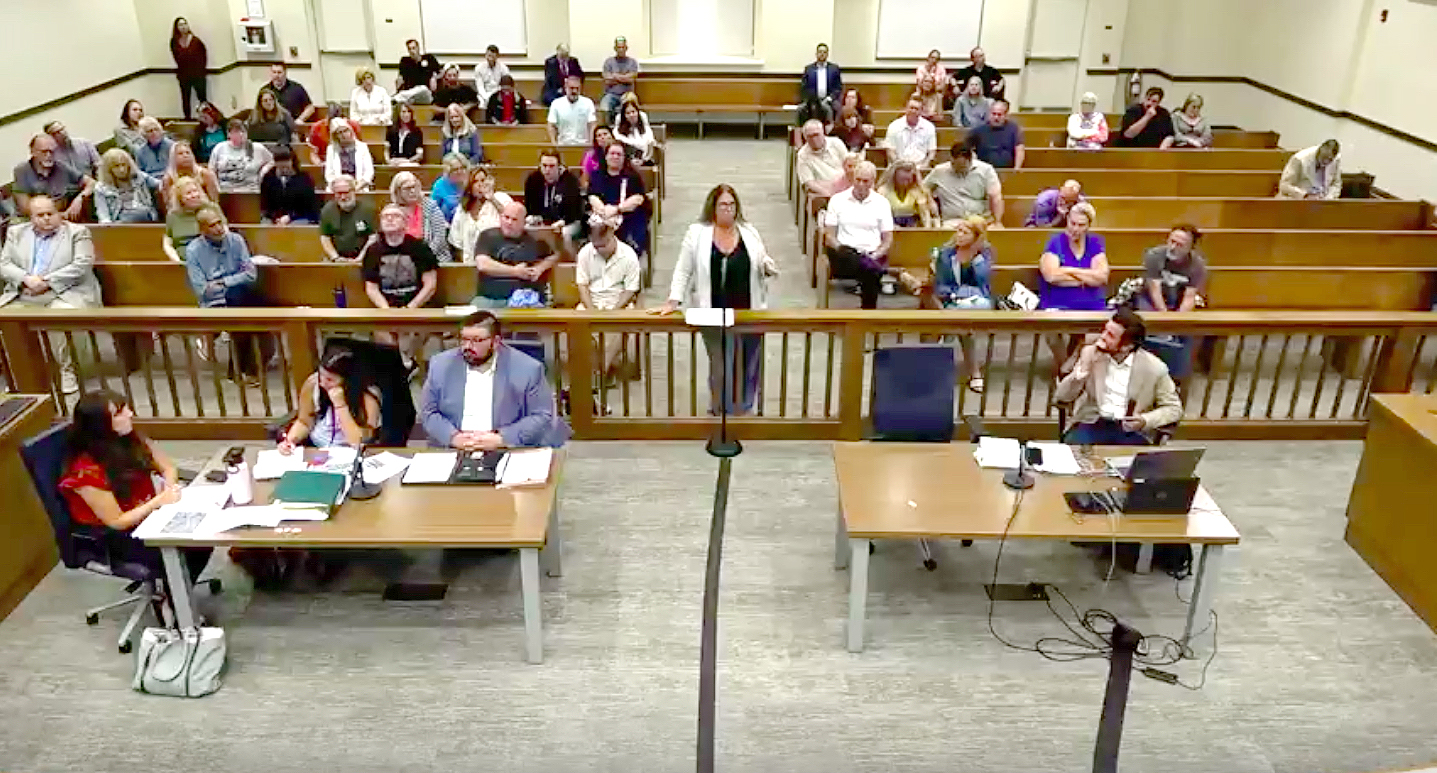
MIDDLETOWN – Residents in the Campbell’s Junction section of the township are hoping to preserve the historic character of their neighborhood while also upgrading it, after the planning board voted unanimously Wednesday to accept a report citing many of its properties as eligible for a redevelopment designation.
The Campbell’s Junction redevelopment area spans Leonardville Road from Church Street to East Road in Belford. At the outset of the packed Sept. 3 planning board meeting, board members emphasized that the redevelopment process does not involve forced property acquisition or the condemnation of properties. The properties were examined for a study to see if they qualified for the “noncondemnation area in need of redevelopment” designation.
According to the report presented by Nicholas Dickerson, a professional planner with Colliers Engineering and Design, out of the 74 properties examined in the study, almost 40 properties were recommended for the designation; nearly half of the remaining properties did not fit the criteria for a redevelopment designation.
“Redevelopment without condemnation is the best of all worlds, because no one has to worry about anyone coming for anyone’s properties,” Dickerson explained.
According to the report available on the township’s website, a redevelopment designation can help transform an underutilized or distressed area into an economically viable and productive part of the community.
Dickerson said the proposed redevelopment study could provide property owners with tools to improve their properties with tax abatements, flexible zoning options, grants for property improvements and the ability to create detailed design guidelines.
The study area investigated a range of properties, from detached single-family dwellings, commercial offices, retail stores, mixed-use buildings, vacant land and apartment buildings to numerous auto body shops, many of which appear to have been previously used as gas stations.
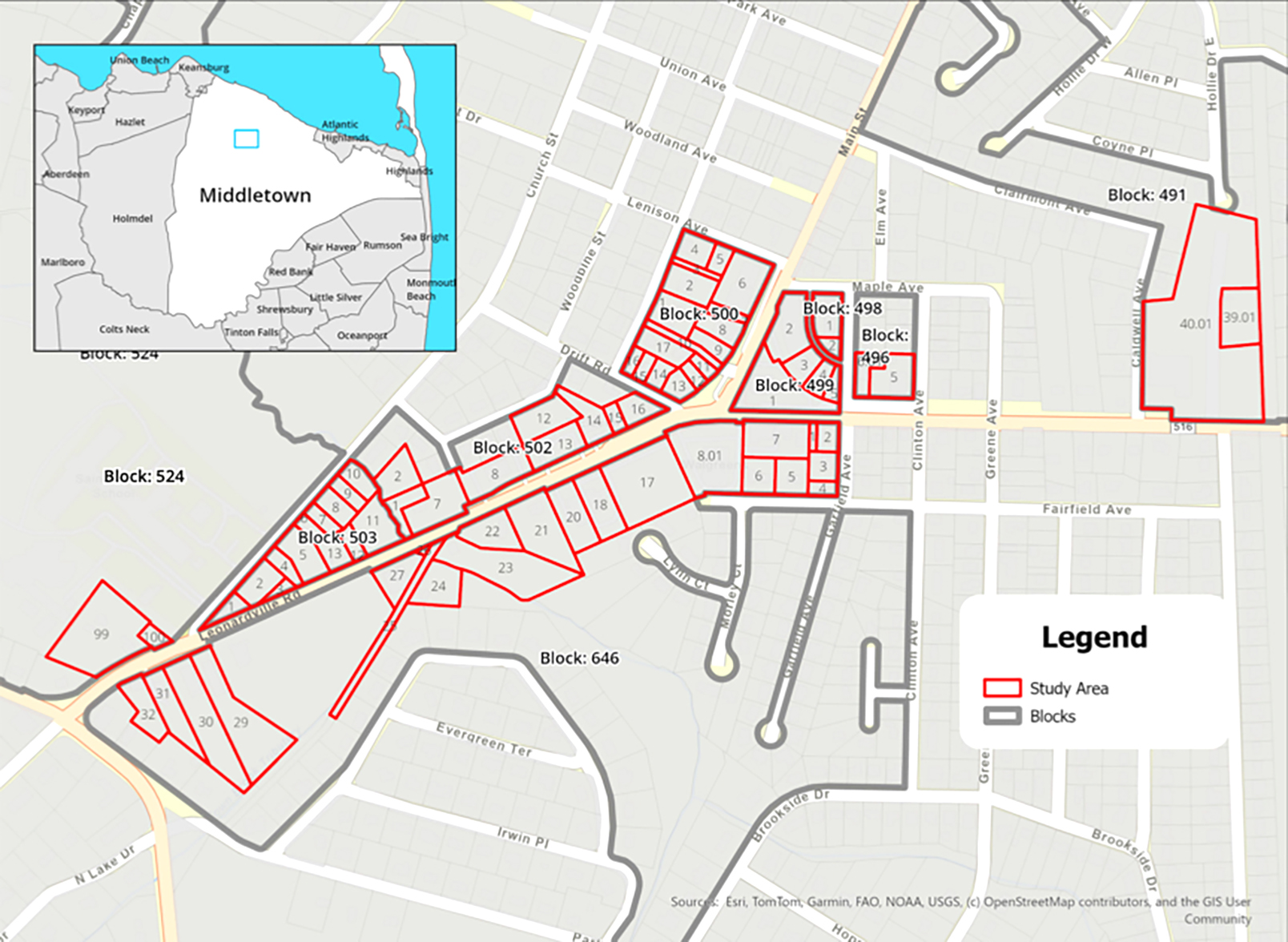
Some of the properties that fit the criteria for redevelopment are two owned by JCP&L properties at 44 and 195 Leonardville Road, with an adjoining lot that serves as its substation; many single-story commercial plazas such as Foodmarket at 115 Leonardville Road; The Junction at 908 Main St.; Strollo’s Lighthouse at 83 Leonardville Road; a mostly vacant retail plaza at 98 Leonardville Road; and a gas station at 54 Leonardville Road; among many others. The properties mostly fit into criterion “B” under the state’s Local Redevelopment Housing Law. That law specifies conditions that must be met within an area to qualify for the redevelopment designation, such as extended commercial vacancies, obsolete design and layout, circulation and access challenges and environmental constraints.
Most of the residential structures in the study area were found to be well-maintained. Dickerson noted that a majority of the properties are “over 50 years old,” and many are single-family homes.
While redevelopment creates a broader framework for an area’s overall transformation, rehabilitation focuses on individual property enhancements. In Campbell’s Junction, Dickerson suggested that many residential properties might be better served by rehabilitation, in order to preserve their historical character while also enabling necessary upgrades.
Most residents in attendance at the meeting wanted their neighborhood preserved and upgraded but not completely demolished to achieve the town’s redevelopment goals.
Campbell’s Junction History, Character
Campbell’s Junction originated in the late 19th and early 20th centuries as a critical transportation hub centered around trolley car routes. According to board member Carl Rathjen, the triangular intersection designed for trolley car movements was initially a dirt road with wooden logs and train tracks serving as a busy connection for public transportation.
During public comments, resident Mary McDonald echoed sentiments of several longtime property owners who said they wanted the neighborhood’s character preserved. “I don’t want to see the decimation of the Junction,” McDonald said. “Create ordinances in this town and architectural guidelines, possibly simple ways to elevate the look of the area without completely demolishing it.”
“There’s no forcing anybody to develop their property; it’s just a recommendation,” Dickerson said. He added that, in terms of protecting the historic character of the area, redevelopment without condemnation can help property owners set specific guidelines, whether it is choosing a type of pavement for the sidewalks or installing historical light posts, that can be included in the redevelopment plan.
“We just want to see it looking nicer, but not changed,” McDonald said.
Several board members said the designation will promote cohesiveness in the area and give residents and owners opportunities to enhance their properties.
“What recourse do we have to see change or to influence or help make changes that we do want to see?” asked resident Lily Keller. The planning board members reiterated that the current stage is merely an initial investigation and encouraged residents to participate in township meetings to voice their priorities.
Amy Citrano, director of the planning board, reassured residents who had traffic concerns about Campbell’s Junction that a separate grant project from the New Jersey Department of Transportation (NJDOT) – not part of the redevelopment study – is also in the works.
Citrano said a “substantial grant from the DOT, upwards of a million dollars,” is in preliminary stages, in conjunction with redevelopment plans for Campbell’s Junction. The grant can substantially help upgrade Leonardville Road, the bus stops and crossroads, and create better circulation, pedestrian and streetscape improvements that will address most of the residents’ concerns about traffic safety.
The redevelopment of Campbell’s Junction will undergo a lengthy legal process. The planning board will forward its recommendations to the township committee. If these recommendations are accepted by the township, the next step would be the preparation of a redevelopment plan that would guide the redevelopment of the designated areas.
Citrano said a follow-up community meeting is planned with “stakeholders and the community to figure out what the community’s vision is, so that when we are approached with redevelopment plans, it can align with that vision.”
The article originally appeared in the September 11 – September 17, 2025 print edition of The Two River Times.