By Sunayana Prabhu
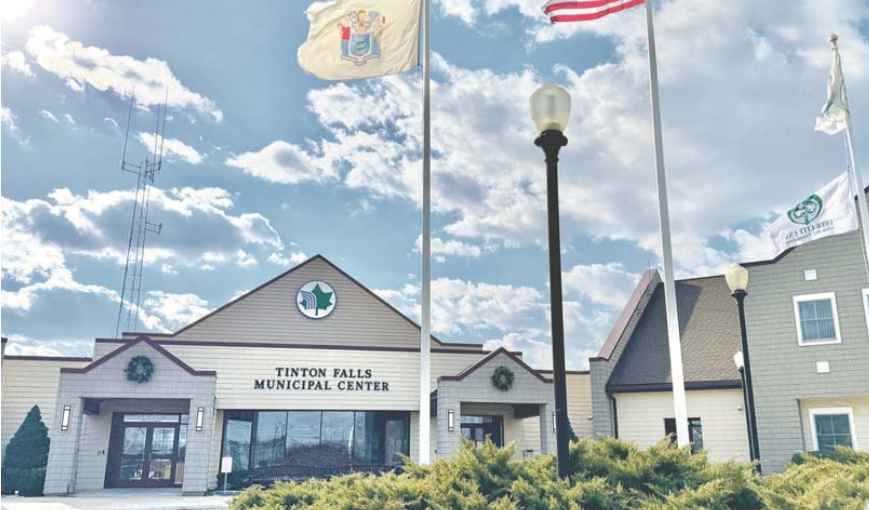
TINTON FALLS – As the state’s affordable housing deadline approaches, municipalities across New Jersey are finalizing their resolutions, either accepting or challenging the required numbers.
Tinton Falls has adjusted part of the state’s estimated affordable housing number for the borough downward by about 18%.
According to Tinton Falls borough administrator Charles Terenfenko, the Department of Community Affairs (DCA) report calculated the borough’s fourth-round obligation at 632 units, 219 of which are designated as prospective need and 413 for present need. Prospective need refers to creating new affordable housing. Present need means rehabilitating existing affordable housing.
Terefenko said the borough has adjusted the prospective need number to 181. “We have a very robust (affordable housing) program here in Tinton Falls, which is why we think that our numbers are acceptable,” he said.
State’s Fair Share Housing Act
The affordable housing calculations are part of New Jersey’s fourth round of mandates, which will run from 2025 through 2035. The round begins with a series of deadlines, starting Feb. 3 when municipalities must adopt a resolution declaring their fair share housing numbers. They have until June 30 to adopt specific plans to meet those numbers, including proposed drafts of zoning and other ordinances and resolutions.
In October 2024, the DCA provided municipalities with nonbinding estimates for both present and prospective housing needs. These estimates were to serve as guidance to help municipalities determine their own calculations for meeting the fourth-round obligations.
The fourth-round mandates follow a legislative amendment to the Fair Housing Act signed by Gov. Phil Murphy in March 2024. The new law directs the DCA to calculate each municipality’s affordable housing obligations, reinforcing housing equity established by the state’s Supreme Court in the 1975 Mount Laurel doctrine. The doctrine requires municipalities to meet affordable housing needs in 10-year cycles, known as “rounds.” Compliance with the law provides municipalities immunity from builder’s remedy lawsuits, while noncompliance risks municipalities losing zoning control to developers who seek to build high-density projects that include affordable housing – typically about 20% of the total number of units.
So far, three rounds of affordable housing obligations have been completed.
Challenges to State Calculations
In the lead-up to the Feb. 3 deadline, municipalities have been reviewing and, in some cases, contesting the DCA’s calculations. Over two dozen towns across the state, including Holmdel, formed a coalition – Local Leaders for Responsible Planning (LLRP) – to challenge the DCA’s methodology for calculating the numbers. They argue that infrastructure and environmental challenges make new development difficult in their towns.
A Mercer County judge recently rejected a lawsuit filed to pause the obligations. A final hearing is scheduled for Jan. 31 when the judge will decide whether to grant a motion to dismiss the lawsuit altogether.
As part of its review of the state’s requirements, Tinton Falls’ professional planners found the DCA’s Geographic Information System (GIS) data of developable land, which was used to calculate the fourth-round numbers, was “over-inclusive” and required correction. The borough’s professional planners revised the GIS “Land Capacity Allocation Factor” from 1.58% to 1.31%, thus arriving at Tinton Falls’ fourth-round prospective need obligation.
Other critics of the DCA’s approach also point to inaccuracies in the GIS tool, which identifies some areas that “lack logic,” former Holmdel Mayor Rocco Impreveduto said during a special meeting last year announcing the township’s participation in the coalition lawsuit. Impreveduto cited the PNC Bank Arts Center commuter lot and the Holmdel municipal swim club as examples of sites listed for development that are clearly unsuitable. “It’s ludicrous to think those locations would be within our purview to even support affordable housing,” he said.
“We’ve found similar issues, which is why we did the resolution,” Terenfenko said, “…which is exactly the reason why we want to rely on the data that we have with our professionals.”
Terefenko said he thinks the borough’s data is “more indepth and more accurate and gives a more true depiction of what’s available to meet our housing numbers in totality.”
Tinton Falls’ Affordable Housing Efforts
The borough has a long history of voluntary compliance with the state’s affordable housing requirements. “We have been fulfilling the affordable housing needs required by the state since the ’80s,” Lori Paone, assistant to the Tinton Falls affordable housing administrator, told The Two River Times early last year. At that time, Paone expressed concerns about meeting future obligations. “Back then, we had a lot of area for us to build. Right now, I don’t see that being the same,” she said. “We are pretty much built out,” a sentiment echoed by other municipalities challenging the DCA’s methodology.
By fulfilling its third-round obligations, the borough has been granted immunity from builder’s remedy litigation until July 1, 2025. Those units are currently under various stages of development from preconstruction to completion and occupancy.
At the Jan. 21 council meeting, the borough adopted a resolution accepting an adjusted prospective need of 181 units, down from the DCA’s estimate of 219, and stating it does not accept the DCA’s present need calculation of 413. The resolution notes the borough will conduct “a wind- shield survey” – a community assessment to determine the correct present need obligation.
The borough noted in the resolution that the future of the act remains uncertain due to active litigation and so it reserves the right to revise the adopted calculations if the act is amended or overturned.
Tinton Falls now awaits the DCA’s response to its proposal. Terenfenko said the borough’s affordable housing team will continue working on projects to meet the community’s needs as the process moves forward.
The article originally appeared in the January 30 – February 5, 2025 print edition of The Two River Times.